
AI-driven search is changing how people find answers online. Instead of typing a question into Google and clicking through several websites, users can now ask tools like ChatGPT, Google AI Overviews, Perplexity, or Claude and receive a direct response in seconds.
That shift has made many marketers nervous. Some now talk about GEO, AEO, LLMO, and other new acronyms as if traditional SEO has suddenly disappeared. But the truth is more encouraging: ranking in AI search still depends heavily on good SEO. The difference is that websites now need to be easier for both humans and AI systems to understand.
AI search is not replacing SEO overnight. Google still handles far more searches than AI tools, and many people continue to rely on traditional search engines. However, AI search is growing quickly, especially among younger users. That means businesses should not wait until the shift is complete. They should prepare now.
Why Traditional SEO Still Matters
Many generative AI platforms pull information from top-ranking search results and trusted sources when creating answers. That means strong organic visibility is still the foundation. If your website does not rank well, does not show expertise, or does not appear trustworthy, it is less likely to be used in AI-generated responses.
Good SEO still matters because AI tools need reliable material to reference. Clear content, helpful answers, strong topical coverage, fast pages, structured data, and authority signals all help search engines and AI systems understand your website.
The goal is no longer just to rank. The goal is to become a trusted source that AI can confidently summarize, cite, or recommend.
Write Content That AI Can Easily Understand
AI prefers content that sounds natural, clear, and helpful. Instead of forcing awkward keywords into headings, use complete questions and conversational explanations.
"AI prefers content that sounds natural, clear, and helpful. Instead of forcing awkward keywords into headings, use complete questions and conversational explanations."
— Scott

For example, a heading like “What Are the Best Running Shoes for Marathon Training?” is easier for AI to interpret than a stiff phrase like “Best Running Shoes Ranked.” The question format matches how real users search and how AI tools process information.
Content should also be comprehensive. AI is more likely to use pages that fully explain a topic, answer related questions, include examples, and show expertise. This is where E-E-A-T matters: experience, expertise, authoritativeness, and trustworthiness.
Useful content should include clear sections, FAQs, statistics, reputable sources, examples, limitations, and related concepts. Instead of repeating the same keyword again and again, build semantic richness with natural terms connected to the topic.
Make Your Website Easy for AI to Crawl
AI cannot recommend what it cannot access. That is why technical SEO is still important.
Your important content should be available in HTML text, not hidden inside images, videos, or JavaScript-only elements. If your best information only appears after a user clicks something or loads a script, AI systems may miss it.
You should also check your robots.txt file to make sure important crawlers are not blocked. Search engines and AI tools often depend on accessible pages, clean structure, and proper indexing.
A clear site hierarchy also matters. Your most valuable pages should be easy to find from the homepage. Internal links should use descriptive anchor text so both users and machines understand how pages are connected.
Use Schema to Remove Confusion
Schema markup helps search engines and AI understand exactly what your content is about. It can identify your organization, articles, authors, products, reviews, FAQs, and other important details.
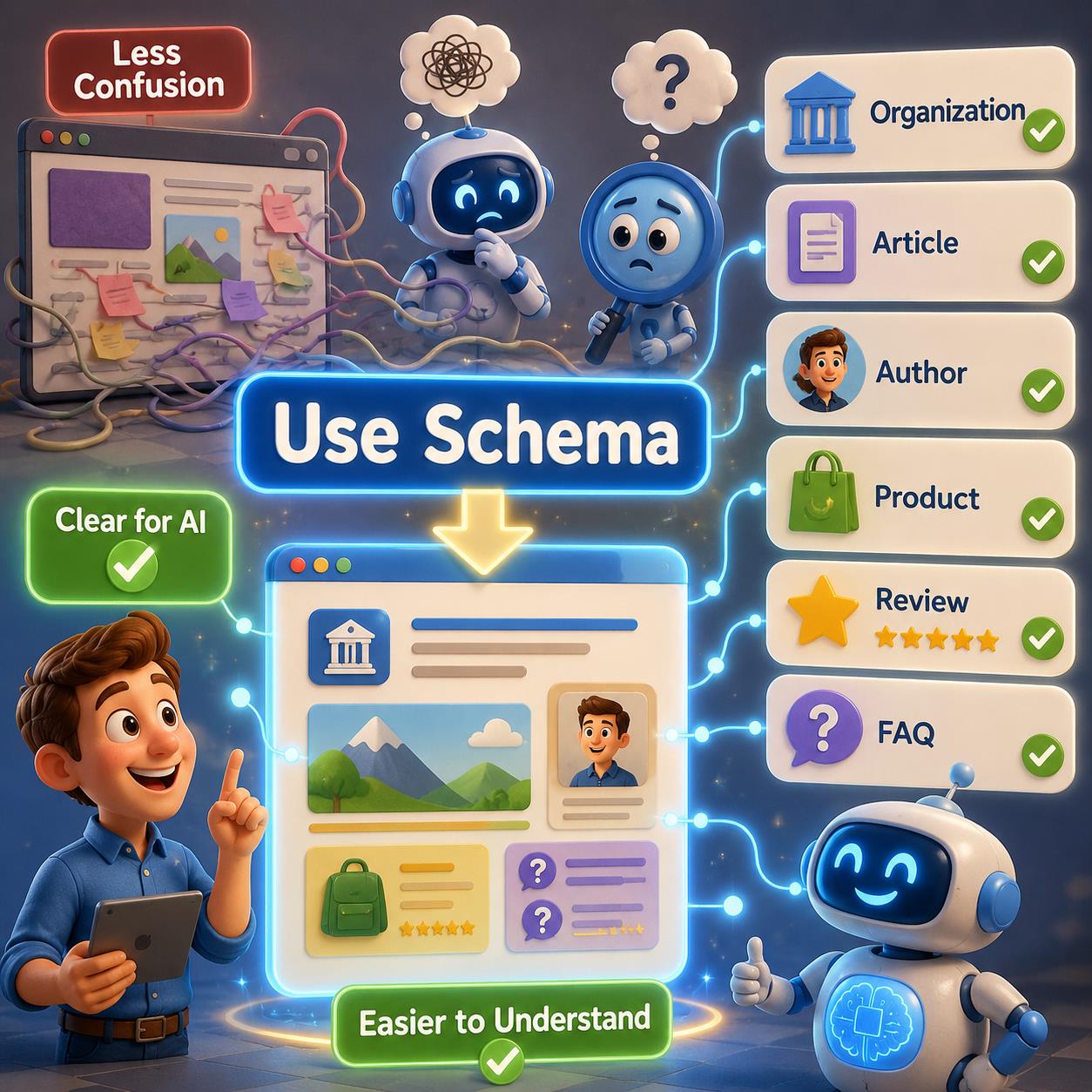
Schema does not guarantee that you will appear in AI results, but it makes your content easier for machines to parse. The clearer your website is, the easier it becomes for AI tools to understand and present your information accurately.
Organization schema, article schema, FAQ schema, and other structured data can help establish your brand and content more clearly across search systems.
Build Trust Beyond Your Website
AI does not judge your website in isolation. It also considers what the wider web says about you.
Mentions in respected publications, positive reviews, quality backlinks, directory listings, industry databases, “best of” articles, and social profiles can all strengthen your authority. The more consistent and credible your brand appears across the internet, the easier it is for AI systems to trust you.
The Big Secret: There Is No Secret
The biggest truth about AI search is simple: it rewards the same things good SEO has always rewarded.
Helpful content. Clear structure. Strong authority. Technical accessibility. Trustworthy information. Real expertise.
AI search may feel new, but the winning strategy is familiar. Build your website as if you are trying to impress a smart human expert, because AI is learning from the same signals humans use to judge quality.
SEO is not dead. It has simply gained another layer. The businesses that adapt now will be easier to find, easier to trust, and easier for AI to recommend.

Frequently Asked Questions

How AI Search Algorithms Are Changing SEO
AI search is changing how people find information online. More users now ask tools like ChatGPT, Perplexity, Gemini, and AI Overviews for direct answers instead of clicking through traditional search results.
Read Article →
Google AI Mode Didn’t Kill SEO. It Exposed Who Was Faking
Google AI Mode is changing what success looks like in search. The old game was simple: rank on page one, get the click, and hope the visitor converts.
Read Article →