
AI search is changing how people find information online. More users now ask tools like ChatGPT, Perplexity, Gemini, and AI Overviews for direct answers instead of clicking through traditional search results. For businesses, this means ranking on Google is no longer the only goal. A brand must also become visible inside AI-generated answers. To do that, its content needs to be relevant, trusted, fresh, and easy for AI systems to understand.
AI Search Wants the Fastest Confident Answer
AI search tools are designed to give users a fast, confident answer. Instead of showing a long list of links, they summarize information from sources they consider useful and trustworthy. This changes the role of content. A page does not just need to rank; it needs to be selected as a source. If the page is not included in the small group of sources the AI retrieves, it may not appear in the answer at all, even if the content is helpful. The transcript explains that AI search works like a matching system, connecting a user’s prompt with trusted sources that clearly answer the question.
What Retrieval-Augmented Generation Means
One important concept behind AI search is retrieval-augmented generation, often called RAG. This means the AI does not always answer only from what it already knows. Instead, it may first retrieve relevant pages from the web, then use those pages to generate an answer. In simple terms, AI search has two main steps: retrieval and generation. The first step decides which sources are worth using. The second step turns those sources into a direct answer. This makes retrieval extremely important. If a website is not retrieved, it has little chance of being cited, summarized, or recommended.

Why Some Websites Get Chosen and Others Do Not
AI search systems look for signals that help them decide which pages deserve attention. The source transcript highlights four major factors: relevance, authority, structure, and freshness. Relevance means the content must be clearly connected to the question being asked, not just stuffed with keywords. Authority means the internet should support the brand or website as credible through mentions, reviews, backlinks, and other trust signals. Structure means the page should be easy to scan, with clear headings, organized sections, useful FAQs, and direct answers. Freshness means the content should be current, especially for topics that change quickly.
Brand Mentions May Matter More Than Traditional Backlinks
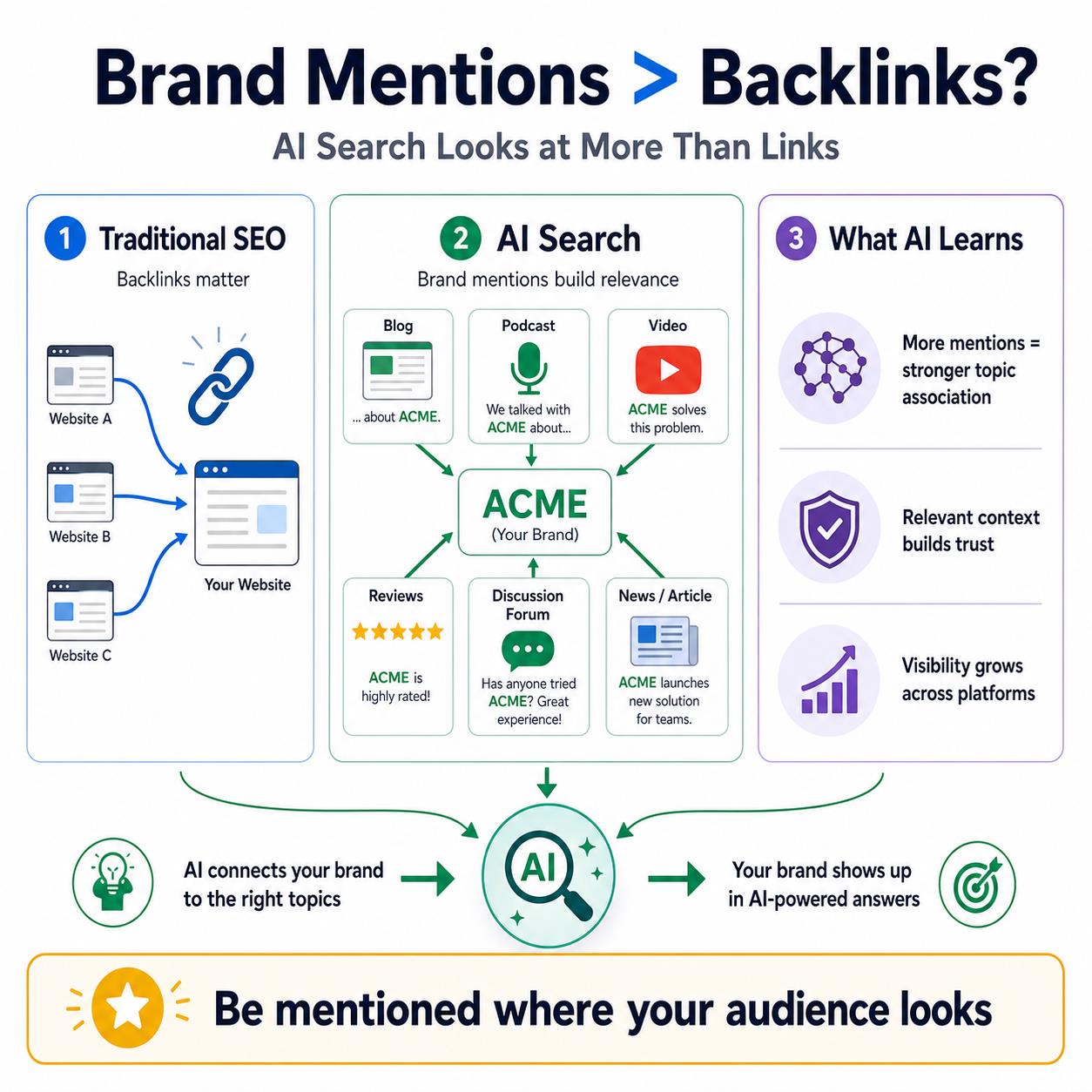
For years, backlinks were one of the biggest focus areas in SEO. They still matter, but AI search also appears to place strong value on brand mentions. A brand mention happens when another website, publication, video, podcast, review site, or online discussion names a business in a relevant context. Even without a direct link, that mention may help AI systems connect the brand to a subject. For example, if a company is often mentioned in connection with email marketing, AI may begin to understand that company as relevant to email marketing. This is why public relations, podcast appearances, reviews, expert roundups, YouTube features, Reddit discussions, and niche publications can support AI search visibility.
Narrow Topical Authority Is Becoming More Important
AI search is more likely to trust brands that go deep on a specific topic instead of publishing random content across unrelated subjects. A business should focus on building topical authority around its core area of expertise. For example, a chiropractic clinic that wants to be known for car accident injury care should create content around whiplash, neck pain, back pain, soft tissue injuries, delayed symptoms, accident recovery, treatment options, and patient questions after a crash. The goal is to show both users and AI systems that the brand truly understands the subject. A strong content cluster helps create that connection.
Website Structure Helps AI Use the Content
AI does not read an article exactly like a human. It often breaks content into smaller sections and decides which parts are useful enough to include in an answer. Because of this, the strongest insight should not be buried near the bottom of a long article. A strong AI-friendly article should lead with the answer, then support it with details, examples, and context. Clear H2 headings, short but complete sections, FAQ blocks, numbered steps, and concise explanations all make the content easier to understand. The easier a page is to extract from, the easier it becomes for AI search systems to cite or summarize it.
Fresh Content Has an Advantage
Old content can lose visibility if it is outdated or no longer accurate. AI search tools often prefer fresher information, especially when the topic involves fast-moving trends, technology, pricing, laws, tools, or customer behavior. This means businesses should regularly update their most important articles. They can add new examples, replace outdated statistics, improve introductions, refresh FAQs, update screenshots, and remove anything that no longer applies. Updating content is not only useful for traditional SEO. It can also help pages become more useful for AI search because current information gives AI systems more confidence in the source.
AI Crawlers Must Be Able to Access the Site
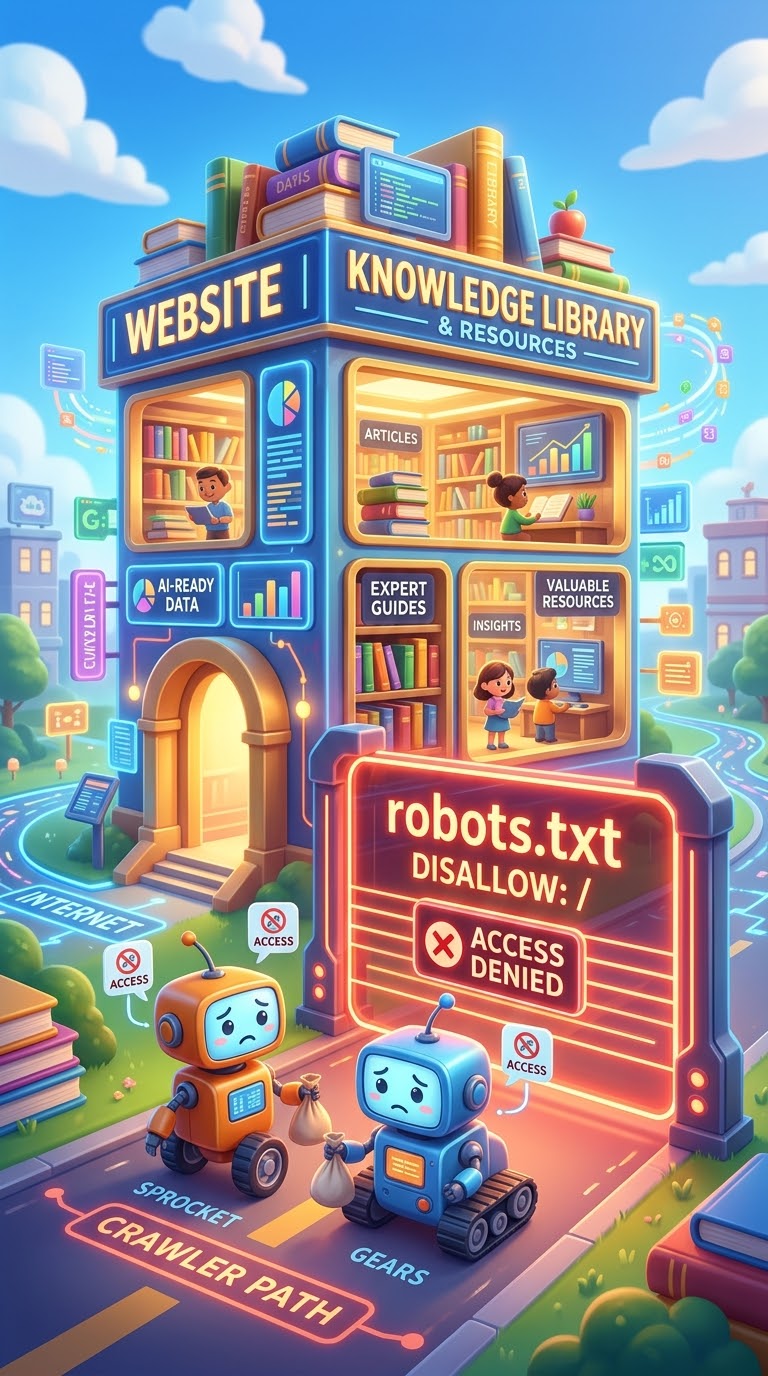
A website cannot be cited by AI tools if AI crawlers are blocked from reading it. The transcript mentions the importance of checking a website’s robots.txt file to make sure important AI bots are not blocked. This small technical issue can have a large impact. If AI systems cannot access a site, they cannot use its content in generated answers. A business may have strong articles, helpful resources, and expert information, but those assets will not help AI visibility if crawlers are prevented from reading them.
AI Search Is Bigger Than Google
Businesses should not assume that optimizing for Google is enough. AI search is becoming a separate ecosystem. People now search through ChatGPT, Gemini, Perplexity, AI Overviews, YouTube, Reddit, and other platforms. Each platform may use different source preferences and different content signals. This means a brand needs broader visibility. Its own website matters, but third-party mentions, reviews, videos, community discussions, and trusted niche publications also matter. The more consistently a brand appears in relevant places, the easier it becomes for AI systems to associate that brand with a topic.
The Future of SEO Is About Trust
AI search does not eliminate SEO. It changes what SEO must become. Winning in AI search is not just about keywords or rankings. It is about becoming a source that AI can confidently trust. That requires clear writing, topical depth, brand authority, fresh information, and strong structure. The brands that benefit most will be genuinely useful, clearly focused, and easy to understand. In the new search environment, visibility belongs to businesses that answer real questions well and make their expertise obvious across the web.

Frequently Asked Questions
Google AI Mode Didn’t Kill SEO. It Exposed Who Was Faking
Google AI Mode is changing what success looks like in search. The old game was simple: rank on page one, get the click, and hope the visitor converts.
Read Article →
Search Everywhere Optimization: The Future of Winning
Most businesses are still stuck in a game that ended three years ago. They’re obsessing over Google rankings, tweaking metadata, chasing backlinks, and hoping to land that coveted #1 spot.
Read Article →
How to Rank #1 on Google in 2025: The Ultimate SEO
Most people don’t know this, but ranking number one on Google in 2025 isn’t just about SEO. Sure, traditional tactics like keywords, backlinks, and content matter—but that’s only part of the puzzle.
Read Article →