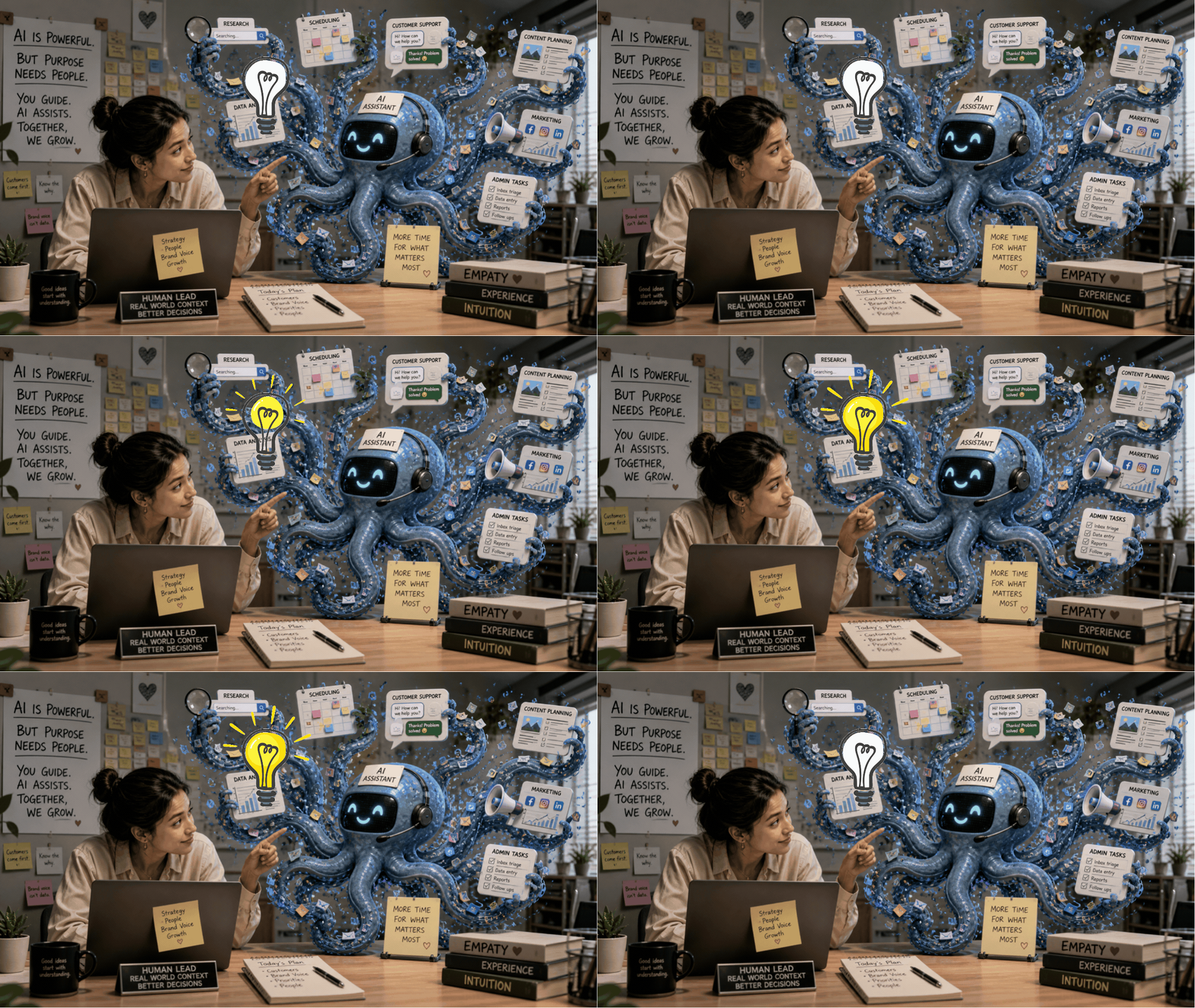
Artificial intelligence is changing the way businesses work. It can help with research, data analysis, scheduling, customer support, content planning, marketing, and repetitive admin tasks. But AI works best when it is guided by a person who understands the business, the customers, and the brand voice.
That is where a virtual assistant becomes valuable.
A virtual assistant can help a business use AI without losing the human touch. AI can move fast, but it does not always understand context, tone, emotion, or customer expectations. A trained virtual assistant can bridge that gap by managing AI tools, checking the quality of AI output, organizing workflows, and making sure the final work still feels clear, accurate, and human.
AI Is Powerful, But It Still Needs Human Direction
AI can process information quickly. It can find patterns, summarize data, generate ideas, and automate repetitive tasks. For many businesses, this can save time and improve productivity.
"AI is not perfect. It can misunderstand instructions. It can produce generic content. It can miss emotional nuance. It may also create errors if no one reviews the output carefully."
— Scott of GlobalDigitalMedia.vip

However, AI is not perfect. It can misunderstand instructions. It can produce generic content. It can miss emotional nuance. It may also create errors if no one reviews the output carefully.
A business that relies on AI alone may become faster, but not necessarily better. The real advantage comes when AI supports people instead of replacing them.
A Virtual Assistant Helps Choose the Right AI Tools
There are many AI tools available today. Some help with sales. Some help with customer service. Some support marketing, social media, data analysis, human resources, or project management.
For a business owner, choosing the right tools can feel overwhelming. A virtual assistant can help by researching options, comparing features, testing tools, and identifying which ones fit the company’s actual needs.

Instead of chasing every new AI trend, the business can focus on tools that solve real problems. For example, a company may need help with email organization, CRM updates, blog outlines, customer replies, social media scheduling, or reporting. A virtual assistant can look at those needs and help build a practical AI workflow around them.
The goal is not to use AI just because it is popular. The goal is to use AI where it saves time, improves accuracy, or supports better service.
A Virtual Assistant Can Manage AI Workflows
Once AI tools are selected, someone still needs to manage them. A virtual assistant can help with that process.
They can create prompts, organize tasks, review AI-generated work, update templates, document best practices, and train other team members on how to use the tools properly. This keeps the AI strategy from becoming scattered or confusing.
For example, a marketing virtual assistant may use AI to create first drafts of captions, blog outlines, or email ideas. But the assistant can then edit the content, adjust the tone, check the message, and make sure it matches the brand. A customer support assistant may use AI to organize common questions, but still review replies before they reach customers.
This kind of workflow keeps the business efficient without making it feel robotic.

Expert Staffing Without The Headaches. Let's help find the best virtual assistant for you
Stop letting busywork steal your best hours. Partner with Global Digital Media to get skilled remote support for admin, calls, leads, content, SEO, and more
Book your free consultation and start growing smarter today.The Human Touch Still Matters
Customers want speed, but they also want to feel understood. AI can help answer questions quickly, but it does not naturally build trust the way a thoughtful human response can.
A virtual assistant can add warmth, judgment, and care to customer interactions. They can notice when a message needs a softer tone. They can adjust communication based on the situation. They can recognize when a customer needs a personal reply instead of a canned response.
This is especially important in service-based businesses. Whether the company works in healthcare, consulting, real estate, legal services, e-commerce, or local services, trust matters. People want to know that someone is paying attention.
AI can support the process. A virtual assistant can protect the relationship.
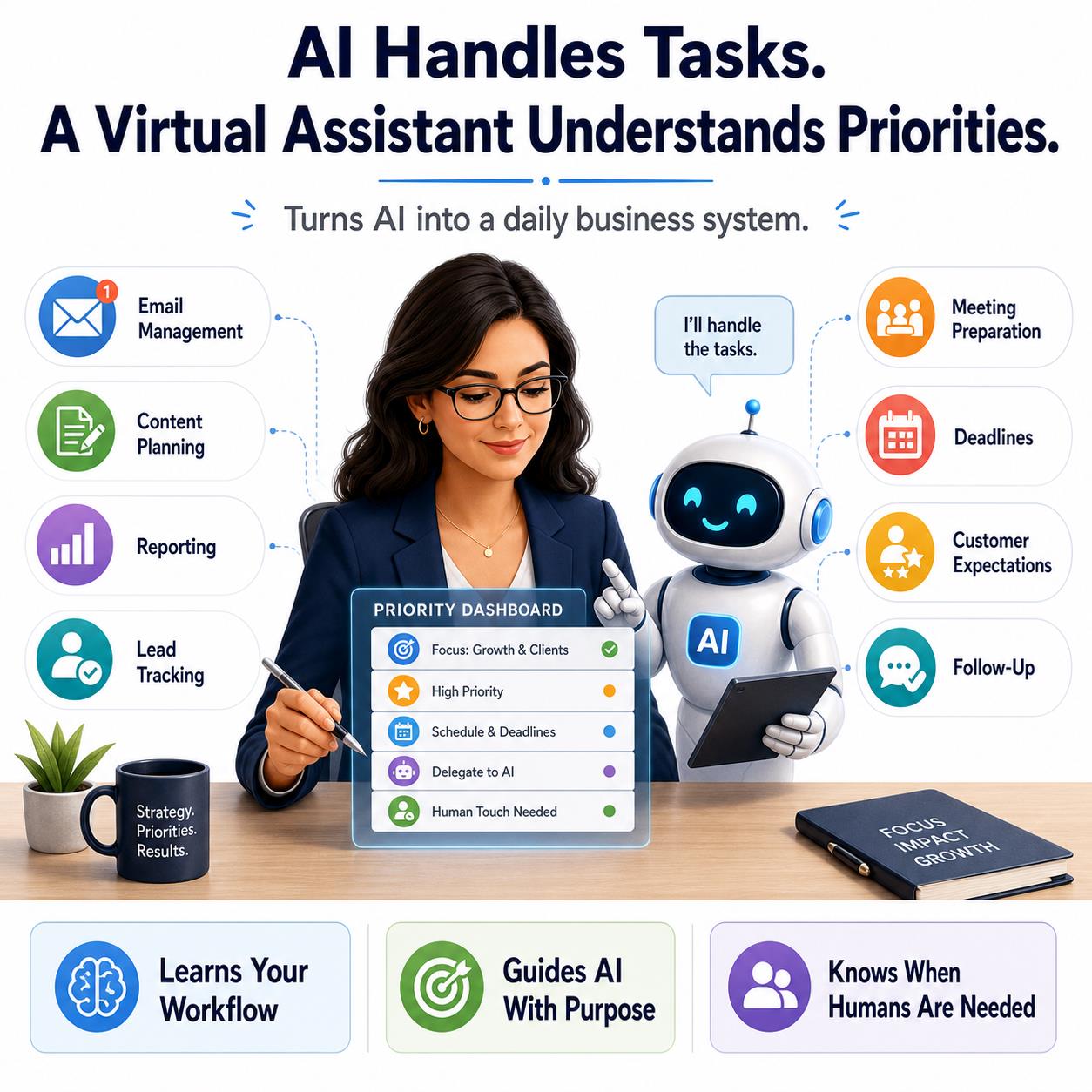
AI Can Handle Tasks, But a Virtual Assistant Understands Priorities
A major benefit of hiring a virtual assistant is that they can learn how the business works. They can understand deadlines, customer expectations, recurring tasks, team preferences, and brand standards.
That knowledge makes AI more useful.
Instead of asking AI random questions, the virtual assistant can use AI with purpose. They can create repeatable systems for content, reporting, email management, lead tracking, meeting preparation, and follow-up. They can also decide when AI is helpful and when a task needs direct human attention.
This prevents AI from becoming another distraction. The virtual assistant turns it into a tool that supports the business every day.
How Businesses Can Integrate a Virtual Assistant Into an AI Strategy
The first step is to identify where the business needs the most support. This may include admin work, customer service, marketing, sales, reporting, social media, or internal organization.
Next, the business should define what the virtual assistant will do with AI. Their role may include researching AI tools, creating prompts, checking AI output, building templates, documenting workflows, or managing AI-assisted tasks.
Training is also important. The virtual assistant should understand the tools, the brand voice, the company’s goals, and the standards for quality. Regular check-ins can help improve the process over time.
The Best AI Strategy Combines Speed With Judgment
AI can help a business move faster. A virtual assistant can help the business move smarter.
Together, they create a balanced system. AI handles repetitive work, organizes information, and speeds up production. The virtual assistant brings judgment, empathy, creativity, and quality control.
This combination allows businesses to save time without sounding automated. It helps teams become more productive without losing their personal touch. It also gives business owners more confidence because someone is guiding the technology instead of letting the technology guide the business.
Final Thoughts
A virtual assistant can play an important role in a modern AI strategy. They can help choose the right tools, manage daily workflows, review AI-generated work, support customers, and keep the brand voice human.
AI may be powerful, but it still needs direction. A virtual assistant provides that direction.
For businesses that want to grow without losing authenticity, the answer is not AI alone. The stronger approach is AI plus human support. That is where a virtual assistant can make the biggest difference.

Frequently Asked Questions

How to delegate work to a virtual assistant?
Are you thinking about hiring an executive virtual assistant (EVA)? Or maybe you’re preparing to become one yourself?.
Read Article →
How to Hire a Virtual Assistant Without Wasting Time or
Running a business is tough enough without spending your days drowning in admin work, emails, scheduling, and repetitive tasks. That’s where a Virtual Assistant (VA) comes in.
Read Article →
Why Hiring a Virtual Assistant Is a Smart Move in 2025
In today’s fast-paced digital world, outsourcing has become more than just a business hack—it’s a growth strategy. And when it comes to hiring virtual assistants (VAs), the Philippines is topping the charts as the go-to country for talent.
Read Article →