Google AI Mode is changing what success looks like in search. The old game was simple: rank on page one, get the click, and hope the visitor converts. The new game is different. Google is moving deeper into the answer business. That means users can get what they need without ever clicking a website. In this world, being visible is not just about ranking. It is about being trusted enough to be cited inside AI-generated answers.
That shift is big. Many marketers still measure SEO by traffic alone, but traffic is no longer the full story. If your brand is being mentioned, cited, and used as a source in AI answers, you are building visibility even when the user does not visit your page right away. That is why smart brands are starting to think beyond rankings and clicks.
Rule 1: Stop Chasing Rankings and Start Earning Citations
The first big lesson is this: citations matter more than simple rankings. In AI Mode, Google is pulling together answers from sources it believes are useful and trustworthy. If your content is not strong enough to be referenced, you can become invisible even if you used to rank well for traditional search.
This changes how content should be created. Thin articles written only to target a keyword will struggle. Pages that clearly explain a topic, answer real questions, and show expertise have a better chance of being used as a source. The goal now is not just to appear in search results. The goal is to become part of the answer itself.
Rule 2: Go After Harder, Longer, More Specific Searches
One of the strongest points from the video is that complex queries create new opportunity. Broad, short keywords are crowded and often less likely to trigger source-rich AI results. More detailed searches, especially those with six or more words, are more likely to lead to AI answers with citations. That gives businesses an opening.
This is where depth wins. Instead of creating one page for a broad keyword, build content around real problems, detailed questions, comparisons, mistakes, and edge cases. Think about what your audience asks when they are close to making a decision. Those are the searches that matter.
For example, a basic keyword may be too general. But a question with context, urgency, or a specific use case gives you more room to show expertise. This is the new moat. It is harder for weak content to compete when the topic demands a real answer.
Rule 3: Zero-Click Search Is Real, So Your Metrics Must Change
A lot of marketers still celebrate clicks like it is 2018. But zero-click search keeps growing. Users are getting answers directly from Google without visiting a site. That does not mean SEO is dead. It means the scoreboard changed.
If you only track sessions, you may think your strategy is failing when your brand is actually becoming more visible in AI-driven search. You need to watch a wider set of signals. Brand searches, assisted conversions, direct traffic, mentions, and visibility across platforms all matter more now.
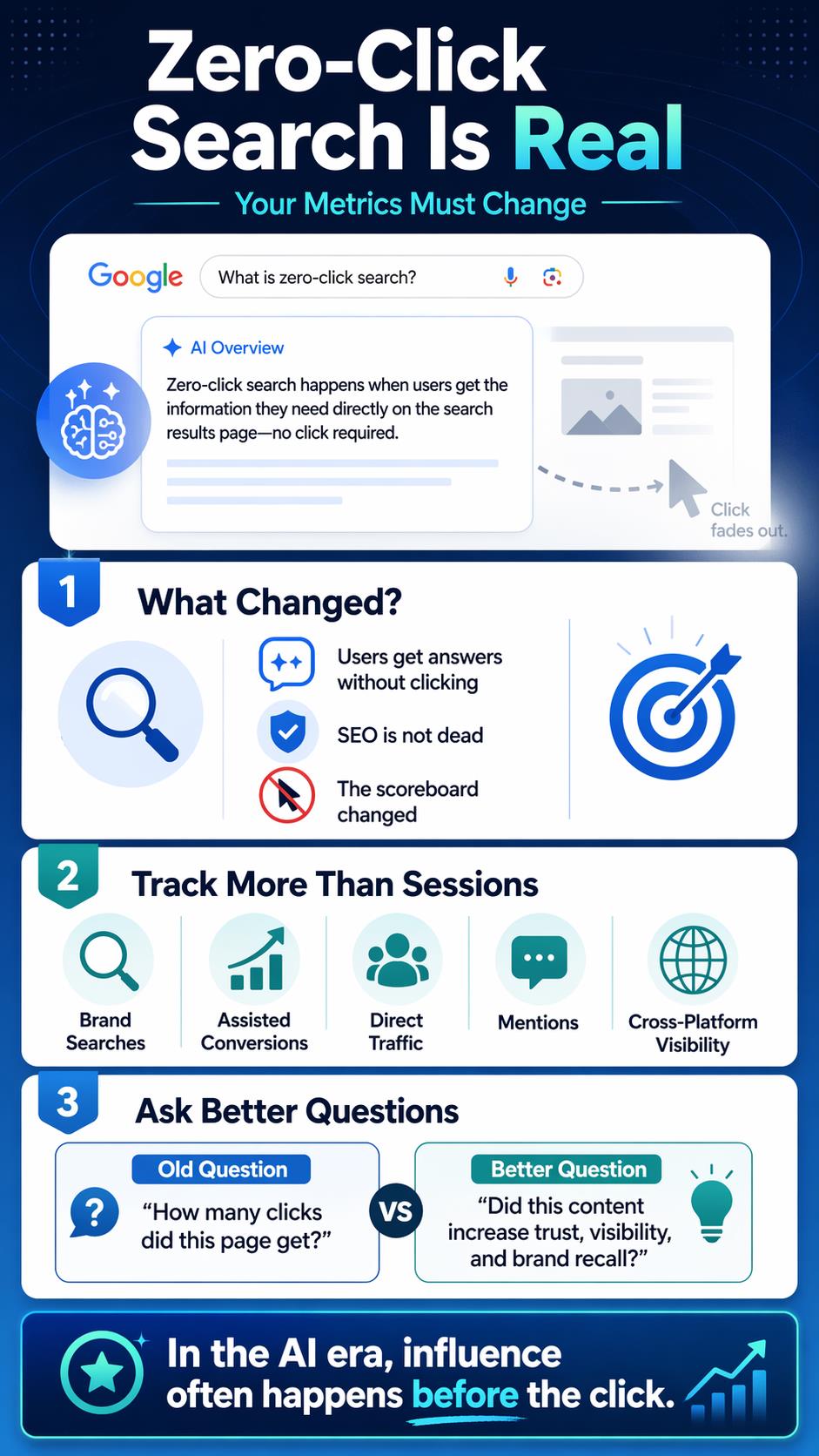
The smartest move is to stop asking only, “How many clicks did this page get?” and start asking, “Did this content increase trust, visibility, and brand recall?” In the AI era, influence often happens before the click.
Rule 4: Authority Is No Longer Optional
The video makes another hard truth clear: traditional SEO is now the baseline, not the advantage. Good technical SEO, clean site structure, and optimized pages still matter, but they are now just the entry fee. On their own, they are not enough.
Authority is what separates brands that get cited from brands that get ignored.
That authority comes from several places. First, publish content where your audience already spends time, not only on your website. Second, get mentioned on trusted sites that AI systems already recognize. Third, use schema markup so your content is easier for search systems to understand. Fourth, create content with real depth, not surface-level coverage.
In simple terms, you cannot hack your way into authority. You have to build it. That takes time, consistency, and proof that your brand deserves attention.
Rule 5: Search Is No Longer Just Google
The final shift is one of the most important. Search behavior is spreading across platforms. People look for answers on Google, but also on TikTok, Amazon, YouTube, and AI tools. That means your brand cannot depend on one channel anymore. The winners are building authority everywhere their audience searches.
This does not mean you need to be everywhere at once. It means you need a smart presence in the places that matter most to your market. If your buyers compare products on Amazon, show up there. If they learn through short videos, build content for TikTok or YouTube. If they ask AI assistants for recommendations, your brand needs enough digital footprint to be recognized.
SEO is becoming part of a bigger visibility system. Search everywhere is the new reality.
What Businesses Should Do Right Now
Start by updating your mindset. Do not build content only for rankings. Build content that deserves to be cited. Create pages that answer detailed questions clearly. Strengthen your authority with expert content, third-party mentions, and structured data. Then expand your presence across the platforms your audience actually uses.
The brands that win in Google AI Mode will not be the ones chasing shortcuts. They will be the ones that become trusted sources.
SEO did not disappear. It grew up.
If you want, I can also turn this into a more SEO-styled blog post with a meta title, meta description, slug, and FAQ section.
Frequently Asked Questions
What is Google AI Mode in simple terms?
Google AI Mode is a search experience where Google gives users a more direct, AI-generated answer instead of only showing a list of blue links. It pulls information from different sources and tries to answer the question right inside the search experience.
Does Google AI Mode mean SEO is dead?
No. SEO is not dead. It is changing. Traditional rankings still matter, but now brands also need to earn visibility inside AI-generated answers. That means helpful, trustworthy, and well-structured content matters more than ever.
What is a zero-click search?
A zero-click search happens when a user gets the answer directly on Google and does not click through to a website. This is becoming more common, especially with AI-generated summaries and direct answers.
Why are citations important in AI search?
Citations help show which sources Google trusts when building an AI answer. If your content gets cited, your brand gains visibility and credibility even if the user does not immediately visit your site.
Should I still target keywords?
Yes, but the strategy should be smarter. Instead of focusing only on short, broad keywords, it is better to create content around specific questions, detailed problems, comparisons, and real user intent.
What kind of content works better in AI-driven search?
Content that is clear, useful, direct, and based on real expertise tends to perform better. Pages that answer real questions and go deeper into a topic have a better chance of being cited than thin content written only for rankings.
Is technical SEO still important?
Yes. Technical SEO still matters because it helps search engines crawl, understand, and index your content. But it is no longer enough on its own. Strong authority and high-value content are now just as important.
What does authority mean in modern SEO?
Authority means your brand looks credible and trustworthy online. This can come from expert-level content, mentions on trusted websites, strong branding, consistent publishing, and clear signals that your business knows its topic well.
Do businesses need to be on platforms outside Google now?
Yes. Search is no longer limited to Google. People also search on YouTube, TikTok, Amazon, and AI tools. A strong digital presence across the right platforms can help your brand stay visible in more places.
What should businesses do first to adapt?
Start by improving content quality. Focus on answering real questions clearly and deeply. Then work on building authority, improving site structure, and showing up where your audience already looks for information.
If you want, I can also expand this into 15 to 20 SEO-friendly FAQs with schema-ready formatting.
Recommended Resources for AI Content Creation & Business Media Tools
Content is the fastest way to attract customers — and now, AI makes it easier than ever. These tools help you create professional videos, voiceovers, podcasts, and marketing content that make your business stand out and build trust instantly. You don’t need to be tech-savvy or hire expensive creators. With the right tools, you can produce powerful content in minutes and position yourself as the expert in your market. The businesses winning today are the ones creating content consistently. Take a look at the tools below and start creating content that brings you customers.
AI Video & Avatar Tools
HeyGen - Creates AI avatar spokesperson videos without filming.
ElevenLabs - Creates realistic AI voiceovers and voice cloning.
BizClips - Done-for-you business video creation service.
Podcasting, Video & Repurposing Tools
StreamYard - Live streaming studio for broadcasting and recording shows.
Castmagic - Turns podcasts and videos into blogs, posts, and marketing content.
YouTube Growth & Optimization
VidIQ - Helps grow YouTube channels using SEO tools and analytics.
Community & Course Platforms
Skool - Platform for building paid communities and online courses.
Hardware Tools
Maono Microphones - Professional microphones for podcasting and content creation.
Maono GamerWave Mic - USB microphone for podcasting, streaming, and recording.
Mindset & Personal Development
MindTrainer Pro - Programs designed to improve mindset, productivity, and success.