In the competitive world of local SEO, climbing into Google’s Local Pack usually takes time. Most businesses build visibility slowly through website optimization, consistent content, citations, backlinks, customer trust, and steady review growth.
But one personal injury law firm appeared to break that slow-growth pattern with a bold community marketing move now known as the “Helmet Gambit.”
Instead of relying only on traditional SEO tactics, the firm gave away free bicycle helmets at a local community festival. The result was a sudden burst of Google reviews, a major jump in local rankings, and a serious debate about whether the strategy was genius marketing or risky manipulation.
What Is the Helmet Gambit?
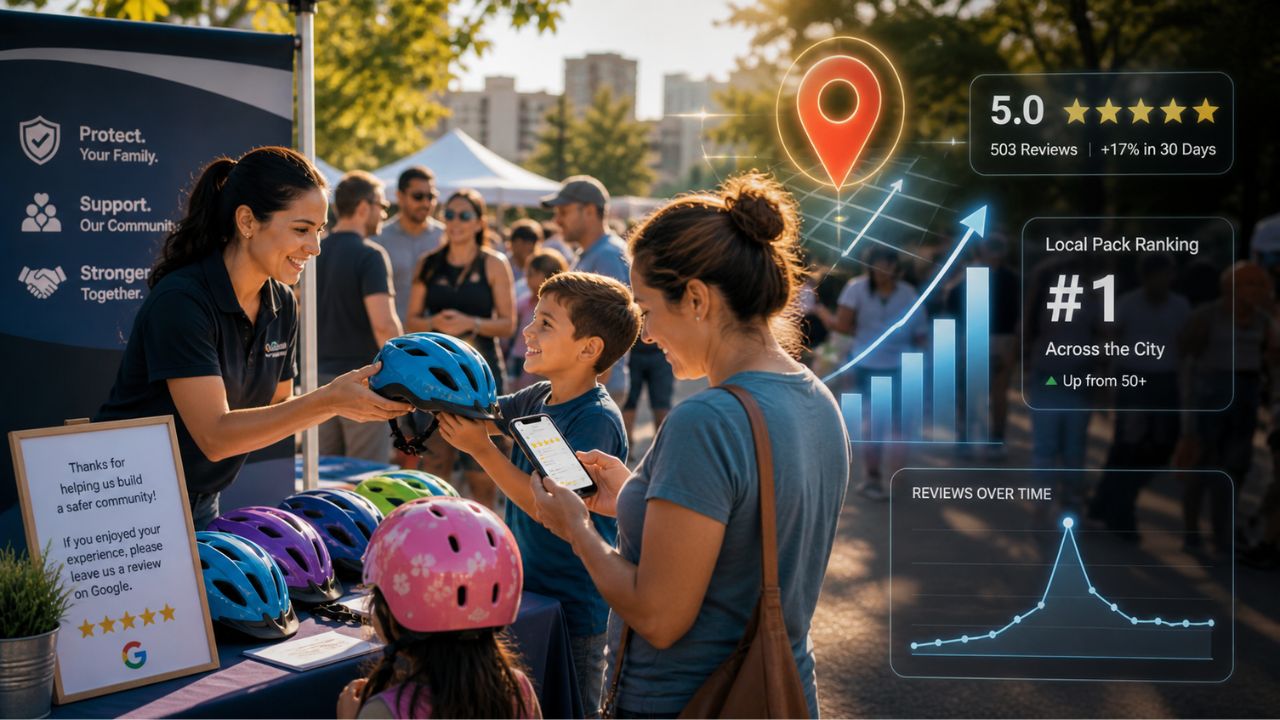
The Helmet Gambit refers to a local SEO strategy where a personal injury law firm created a booth at a community festival and gave away free bicycle helmets to children. The offer was directly connected to the firm’s safety-focused brand, since personal injury lawyers often deal with accidents, injuries, and prevention.
As families received the helmets, representatives from the firm reportedly asked them to leave a Google review. Many people did. Some reviews even included photos of children wearing their new helmets.
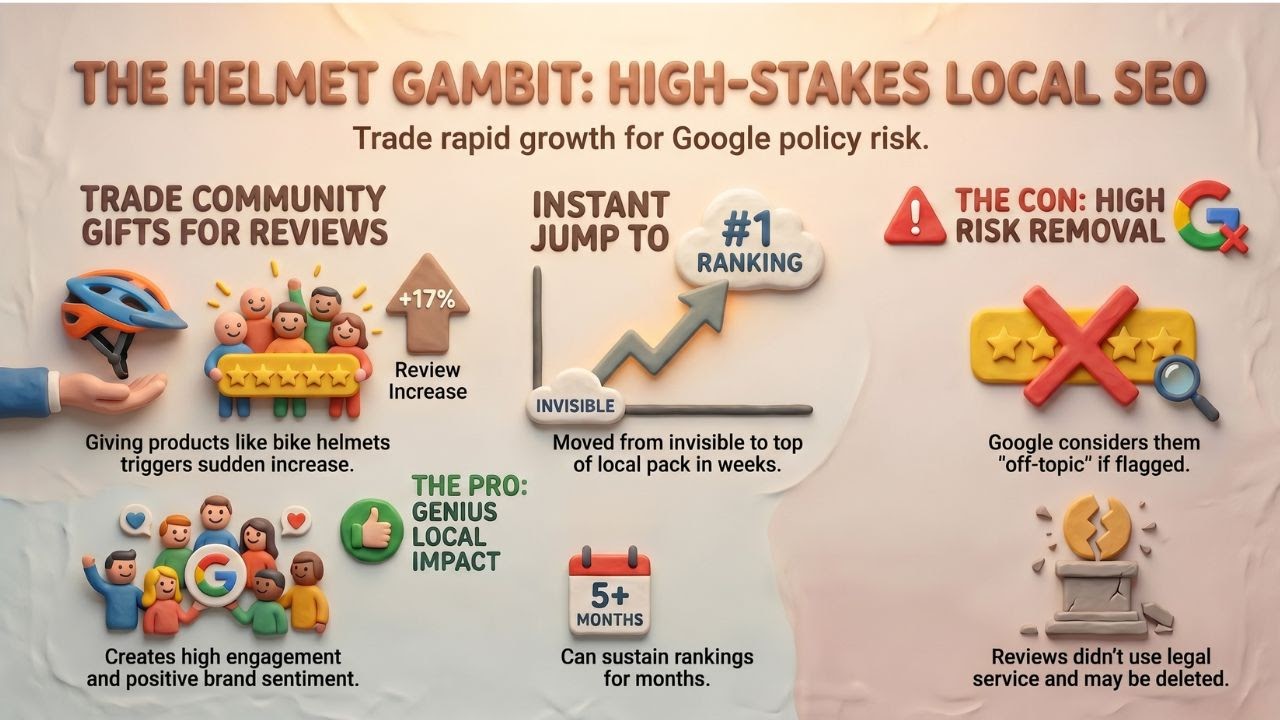
This created a powerful wave of local engagement. In one month, the firm’s Google review count reportedly increased from 431 to 503 reviews, which was about a 17% increase. That review surge appeared to happen at the same time the firm’s local rankings climbed dramatically.
From Invisible to Number One
Before the Helmet Gambit, the law firm was barely visible for many valuable local search terms. For several tracked keywords, the business was either near the bottom of the results or missing from local search visibility altogether.
Then the review spike happened.
Almost overnight, the firm’s rankings surged upward. According to the case study, the business reached the number-one position across nearly the entire city for important local keywords. Even more interesting, the rankings did not disappear immediately after the review activity slowed down.
The firm reportedly held strong number-one local rankings for at least five months after the initial review burst.
That is what made the case so surprising. It suggested that a high-volume review surge, especially when connected to real-world local engagement, may have a longer-lasting impact than many SEO professionals expected.
Why the Strategy Worked
The Helmet Gambit likely worked because it combined several powerful local SEO signals at once.
First, it created a sudden increase in review volume. Google reviews are one of the most visible trust signals in local search. When a business gains many new reviews quickly, it can look more active, more relevant, and more trusted.
Second, the reviews were connected to real community interaction. The firm was not simply asking strangers online for reviews. It was physically present at a local event, interacting with families, giving away useful safety equipment, and building goodwill.
Third, many of the reviews included photos. User-generated photos can make a business profile look more active and authentic. For Google’s local ecosystem, that kind of engagement may strengthen the perception that the business is connected to the local community.
Finally, the giveaway matched the law firm’s brand. A personal injury firm giving away bicycle helmets makes sense. It connects to safety, accident prevention, and public service. That alignment made the campaign feel more natural than a random giveaway.
The Ethical Problem
The strategy may have worked, but it also created controversy.
The biggest question is whether those reviews were truly relevant to the business’s main service. The people leaving reviews were not necessarily legal clients. They may not have hired the law firm, received legal advice, or experienced its professional services.
Instead, many reviews were based on a festival interaction and a free helmet giveaway.
That creates a gray area.
On one hand, the interaction was real. The firm did something helpful in the community. People had a direct experience with the business and chose to leave feedback.
On the other hand, the reviews may not reflect the quality of the firm’s legal work. A five-star review for receiving a free helmet is not the same as a five-star review from a client who was represented in a personal injury case.
This is why the Helmet Gambit raises an important local SEO question: should a business earn reviews from any real interaction, or only from people who used its core service?
The Risk of Review Removal
The biggest danger with this strategy is review removal.
If Google decides that the reviews are off-topic or violate its guidelines, it could remove them. If many reviews are removed at once, the business could lose the ranking boost that came from the review surge.
"If Google decides that the reviews are off-topic or violate its guidelines, it could remove them. If many reviews are removed at once, the business could lose the ranking boost that came from the review surge."
That means the strategy has a high upside but also a high risk.
For businesses in competitive industries, especially personal injury law, the potential reward can be massive. Holding the number-one position in Google’s Local Pack for several months could generate valuable calls, leads, and cases.
But if the reviews are flagged, reported, or removed, the rankings could fall just as quickly as they rose.
Why Businesses Are Paying Attention
The Helmet Gambit matters because it shows how powerful reviews can be in local SEO.
Many businesses focus heavily on websites, citations, backlinks, and content. Those are still important. But this case shows that review velocity, community engagement, and user-generated content may have a major effect on local visibility.
It also shows that offline marketing can influence online rankings.
A booth at a local event. A useful giveaway. A polite review request. A wave of customer engagement. Together, those offline actions created digital signals that appeared to move the business to the top of search results.
That is why local marketers are paying attention. The strategy connects real-world community activity with Google Business Profile growth.

Is the Helmet Gambit a Good Strategy?
The answer depends on how it is used.
As a community marketing idea, it is smart. A personal injury law firm giving away bicycle helmets is useful, relevant, and brand-aligned. It helps families and positions the firm as a safety-focused local business.
As a review-generation tactic, it is more complicated.
Businesses should be careful when asking for reviews from people who have not used their actual service. A review should accurately reflect a person’s real experience with the business. If the experience was only a giveaway, the review should not pretend to be about legal representation, medical care, professional service, or client results.
The safest version of this strategy would focus on honest, transparent feedback. For example, attendees could mention the community event, the helmet giveaway, or the helpful interaction at the booth. They should not be encouraged to write fake client-style reviews.
What Local Businesses Can Learn
The Helmet Gambit offers several lessons for local businesses.
A strong local presence is not built only online. Community events, sponsorships, giveaways, workshops, and public service campaigns can create real engagement that supports digital visibility.
Review growth matters. A business that consistently earns fresh, authentic reviews may have a stronger chance of improving its local rankings.
Relevance matters too. The more closely a campaign connects to the business’s service, the more natural it feels. A safety giveaway makes sense for a personal injury law firm. A posture workshop may make sense for a chiropractor. A home safety checklist may make sense for a contractor.
But businesses should avoid crossing the line into misleading reviews. Local SEO gains are valuable, but trust is more valuable. A short-term ranking win can become a long-term reputation problem if customers or competitors see the tactic as manipulative.
Conclusion
The Helmet Gambit is one of the most interesting local SEO case studies because it sits between smart community marketing and risky review strategy.
The law firm created real-world goodwill by giving away safety equipment to children. That community engagement led to a sudden review surge, and the review surge appeared to help the firm dominate Google’s Local Pack for months.
But the strategy also raises serious ethical questions. If reviews come from people who did not use the company’s core service, Google may consider them off-topic. That creates the risk of review removal, ranking loss, and reputational damage.
The real lesson is not simply to copy the Helmet Gambit. The lesson is to understand the power of local engagement. Businesses that serve their communities, create memorable experiences, and earn honest reviews can build stronger visibility both offline and online.
Used carefully, community-driven marketing can support local SEO. Used recklessly, it can create a dangerous shortcut that may not last.

Frequently Asked Questions

How AI Search Algorithms Are Changing SEO
AI search is changing how people find information online. More users now ask tools like ChatGPT, Perplexity, Gemini, and AI Overviews for direct answers instead of clicking through traditional search results.
Read Article →
Google AI Mode Didn’t Kill SEO. It Exposed Who Was Faking
Google AI Mode is changing what success looks like in search. The old game was simple: rank on page one, get the click, and hope the visitor converts.
Read Article →
How to Rank Local Businesses in 2 Weeks Without Hacking
I rank local businesses so fast that people often think I hacked Google. And honestly, I kind of get it.
Read Article →