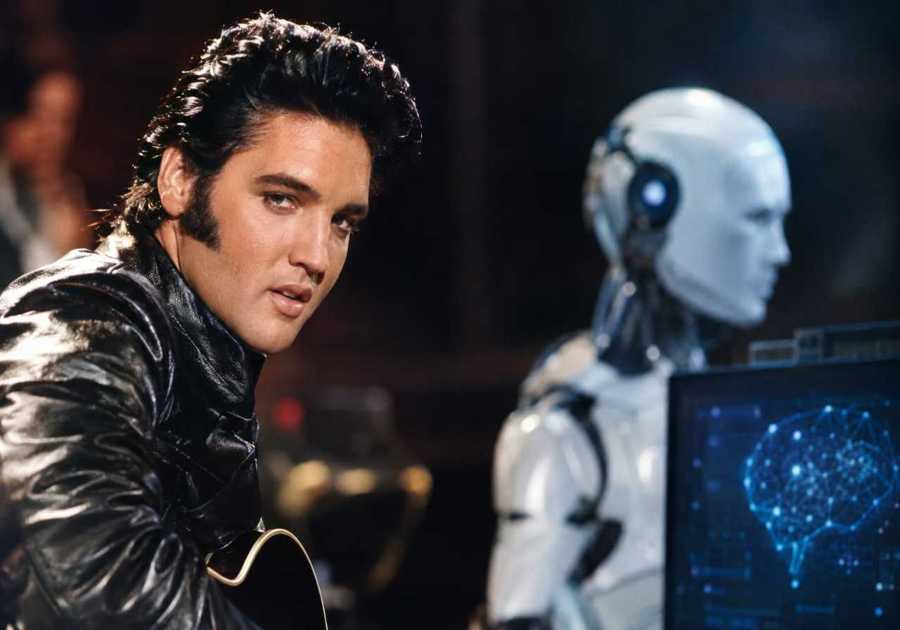
Here's a number that stopped me: $25 billion. That's the size of the global market for ads featuring celebrities and athletes, every year, according to Ogilvy. Now here's the problem that comes with it — traditional shoots just can't keep up with how fast brands need content these days.
So what do you do when the old system is too slow and the new tools are full of deepfakes nobody trusts?
Ogilvy thinks it has an answer. On Monday, the agency announced Echo, a new AI platform built with Creative Artists Agency, one of the biggest talent agencies in the world. Echo runs on top of something called The CAA Vault — basically a secure library where CAA stores the digital likenesses of its clients, captured and licensed properly, with consent built in from day one.
The idea is simple, even if the tech behind it isn't. A brand does one shoot with a celebrity or athlete. Instead of walking away with eight or ten usable assets, like a traditional production, Echo helps generate 30 to 50. Ogilvy says that cuts the average cost per asset by 65% to 75%.
I've spent years building a life around asking "what happens if I try this differently?" So naturally, this caught my attention. What happens if one shoot could do the work of five? That's the question Ogilvy's been chasing.
"Clients want more content, and talent agencies have high quality assets. How do we bridge those things together?" said Carol Reed, Ogilvy's global chief innovation officer. She's quick to point out this isn't about replacing creativity with software. "It is more about how you solve the question around human AI likeness and making it scalable and repeatable for wide-scale use."
The real risk isn't efficiency — it's trust
Here's the part that actually matters more than the cost savings. We're living in a moment where people scroll past fake videos of real humans every single day. If a brand uses AI to generate a celebrity endorsement, how does anyone know it's legit?
Ogilvy surveyed more than 1,200 people across the U.S., UK, and India to find out. The results were clear: more than 80% recognized talent-approved messaging as proof that the AI use was legitimate. And more than 76% said that approval actually made the ad more appealing to them, not less.
Even people who said they distrust AI in general still responded better when they saw the talent had explicitly signed off.
That tells you something important. People aren't rejecting AI outright. They're rejecting AI that feels sneaky.
David Raichman, Ogilvy's global AI creative lead, put it well: "Trust in advertising has always come from two things: someone you believe and an idea worth believing. AI has challenged both." Echo, he says, is an attempt to put those two things back together — the talent's consent, visible on every asset, paired with a creative idea good enough to earn that trust.
Every approved asset carries a visible watermark: "[Talent Name] Approved | Recreated with AI." No guessing games. No fine print buried somewhere nobody reads.
Built-in guardrails, not an afterthought
What struck me most is how the approval process isn't optional or bolted on later. Every generated asset gets automatically checked against machine-readable usage terms and brand safety rules. Nothing goes live without a final sign-off through an approval portal. The AI models themselves are trained only on CAA Vault data — meaning the talent agreed to be there in the first place.
Reed admitted she wasn't sure what the consumer research would show. "I was a little nervous, to be honest with you," she said. But she came away believing people have shifted. "We're at a point now where people aren't afraid of AI... I think people are getting to the point where they appreciate disclosure and transparency."
Echo is available now across the WPP network, and pilots are already underway, though Ogilvy isn't naming which brands or talent yet.
What I find interesting isn't the software — it's the question behind it. How do you move fast without losing the thing that makes people believe you in the first place?
That's not just an advertising question. It's one worth asking about almost anything new we try, whether it's a piece of tech, a new way of working, or a completely different path through life. Move fast, sure. But never lose the trust that got you there.
Source: Marketing Dive
If you missed it: AI Can Build Content. It Can't Build a Fandom.