Type "skincare for acne" into ChatGPT right now. Go ahead, I'll wait.
Whatever pops up at the top of that answer? That's the new storefront. And Ulta Beauty wants to own it.
I came across this story about Ulta's chief marketing officer, Kelly Mahoney, talking at something called the Status Summit, and it stopped me mid-scroll. Not because it's about makeup. I know next to nothing about skincare. It stopped me because it's about a question I keep running into everywhere I go: when the customer is a piece of software, how do you market to it?
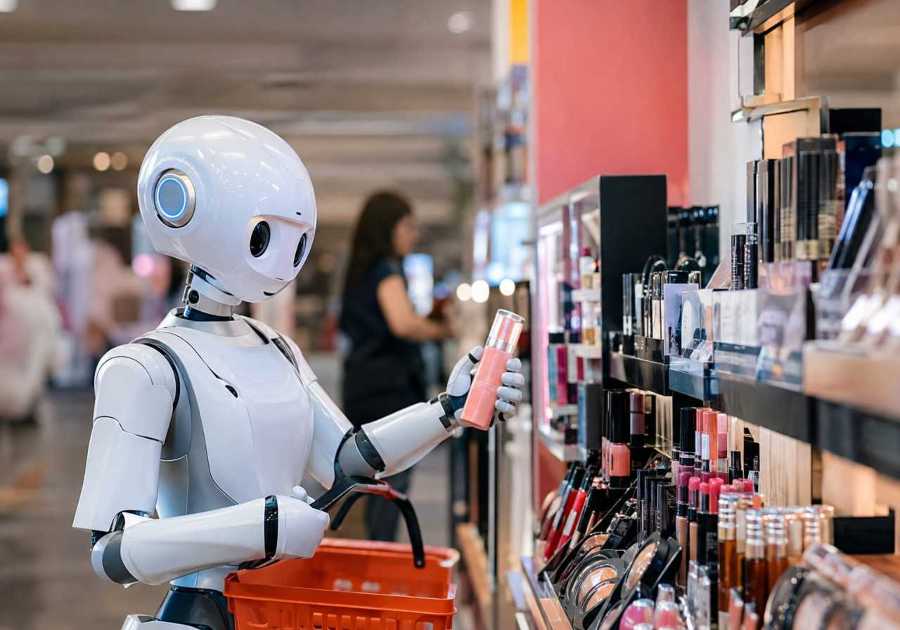
Here's what's going on. People aren't just Googling products anymore. They're asking AI agents directly - "where do I buy this," "what's good for acne-prone skin" - and letting the bot hand them an answer. Mahoney's blunt about what that means for a retailer like Ulta: "We say we want to be the best marketers to our consumer, but we also need to be the best marketers to the agent."
Read that twice. The agent is now a customer you have to persuade.
The brand you can't control, times two
Mahoney doesn't treat this as some brand-new frontier, though. She's been dealing with un-controllable voices for years - store associates and influencers.
Ulta runs something called the Ulta Beauty Collective, a group of influencers the company briefs and builds relationships with. It also leans hard on its store associates, who Mahoney calls the brand's real ambassadors. In both cases, Ulta doesn't write the script. It can't make a creator say the right thing or force an associate to recommend a product. All it can do is make sure the people talking about Ulta actually know what Ulta's about.
Her logic: an AI agent is just another version of that. "It's just that it's agents. It's non humans," she said. The agent decides what to surface when someone types a question. Ulta can't write that answer directly. But it can shape what the agent knows. That's the whole game now - not SEO, ranking links, but what people are starting to call GEO: generative engine optimization. Feeding the machine good material so it quotes you back.
I love this because it's such a practical way to think about something that sounds intimidating. You don't need a 40-page AI strategy. You need to ask: what does the robot need to know about me, and have I actually told it?
Data that's older than the hype
Underneath all of this is something way less flashy: loyalty data. Mahoney's been at Ulta for eleven years. When she started, the rewards program had about 11 million members. It's grown a lot since, and nearly every sale ties back to an identified customer.
What struck me is how she talks about personalization - she called it an overused word, which, fair. For Ulta it doesn't start with "here's a coupon based on your age and zip code." It starts with motivation. Why is this person here? They build customer segments around that, then layer in signals that have nothing to do with a purchase: social activity, store visits, whether someone leaves a review. A shopper who's known to visit stores might just get a message that store hours changed nearby. Small, useful, earned.
That's the foundation she says Ulta's building its agent strategy on, even though she admits nobody's written the playbook yet. Her answer to working without one is simple: measure everything, test, adjust, keep moving. Which, honestly, sounds a lot like how I've run my own travels for the last eight years - you don't wait for a map that doesn't exist. You go, you learn, you course-correct.
The store still wins the last mile
Here's the part I didn't expect. You'd think AI agents doing the shopping would make physical stores less important. Ulta's research on younger shoppers - the ones glued to chatbots and TikTok - says the opposite. Those consumers still crave walking into a store. Mahoney called that finding "kind of a sigh of relief."
So the agent might send someone to Ulta. But the store is what makes them come back.
Makes sense to me. I've met plenty of young, AI-fluent travelers online who still want the real trail, the real conversation, the real place. Software can point the way. It can't replace the trip.
Source: MarketScale
Still catching up? Start with Elvis Presley's Music Owners Just Sued an AI Company — And It's Not Just About Elvis