Many businesses believe their email marketing is healthy because the numbers look fine. Open rates appear decent. Emails are not bouncing. Complaint rates do not look terrifying. Everything seems under control.
But there is a hidden problem.
One of the most commonly tracked email metrics stopped being reliable years ago. Open rates, once treated as the clearest sign of subscriber interest, no longer tell the full truth. Because of privacy changes, email apps can preload messages before a person actually reads them. That means your platform may record an “open” even when no real human engagement happened.
This creates a dangerous illusion. You may think your list is active when it is not. You may think your subject lines are working when they are only triggering machine activity. Worse, you may be deleting valuable leads because they look inactive too soon.
Email marketing still works, but only if you stop trusting the wrong signals.
Why Open Rates Can Mislead You
Open rates used to be a simple way to measure whether people were paying attention. If someone opened an email, that seemed like proof of interest.
Today, it is not that simple.
Privacy features from major email providers can make emails appear opened automatically. Some inbox systems preload images or scan messages in ways that trigger an open before the subscriber ever sees the email. This means open rates may be inflated, distorted, or disconnected from actual reader behavior.
That is a major problem if you use open rates to decide who stays on your list, who gets removed, or which campaigns are working.
A subscriber may be counted as engaged even if they never read your email. Another subscriber may be quietly researching, comparing, and waiting to buy, but because they did not click within your chosen window, your system may label them inactive.
That is how businesses end up making decisions based on false confidence.
The Sunsetting Mistake That Deletes Buyers Too Early
List hygiene matters. Removing truly inactive subscribers can protect deliverability and improve performance. But many businesses remove people too quickly.
"List hygiene matters. Removing truly inactive subscribers can protect deliverability and improve performance. But many businesses remove people too quickly."
— Scott

This is especially risky for businesses with longer buying cycles. Some customers do not make a decision in 30, 60, or even 90 days. They may need time to compare options, talk to a team, wait for budget approval, or simply feel ready.
If your system removes them before their natural buying timeline is complete, you are not cleaning your list. You are cutting off potential buyers mid-decision.
A better approach is to match your inactivity window to your actual customer journey. Ask how long it usually takes someone to buy. Consider whether your business is seasonal. Think about how often customers need your product or service.
Before removing anyone, send a simple re-engagement email asking if they still want to hear from you. Let the subscriber tell you instead of guessing from silence.
What to Track Instead
If open rates are unreliable, what should businesses measure?
Start with click rate. A click usually requires real human action. It shows that someone was interested enough to interact with your message.
Replies also matter. A reply shows attention, trust, and genuine engagement. Purchases are even stronger because they connect email activity directly to revenue.
Another important number is monthly active subscribers. This looks at how many people on your list actually did something in the last 30 days, such as clicking, buying, or replying.
These signals give a clearer picture of email health than opens alone. They show whether your audience is not just receiving messages, but responding to them.
Why Inbox Placement Matters More Than Delivery
Many businesses confuse delivery with inbox placement.
Delivery means the email was accepted by the receiving server. But that does not mean it landed in the primary inbox. It may have gone to promotions, marketing folders, or spam.
That distinction matters.
If your emails land in spam, subscribers may never see them. If they land in crowded promotion folders, they may be ignored. Over time, weak engagement can make inbox providers even less likely to place your emails where people actually read.
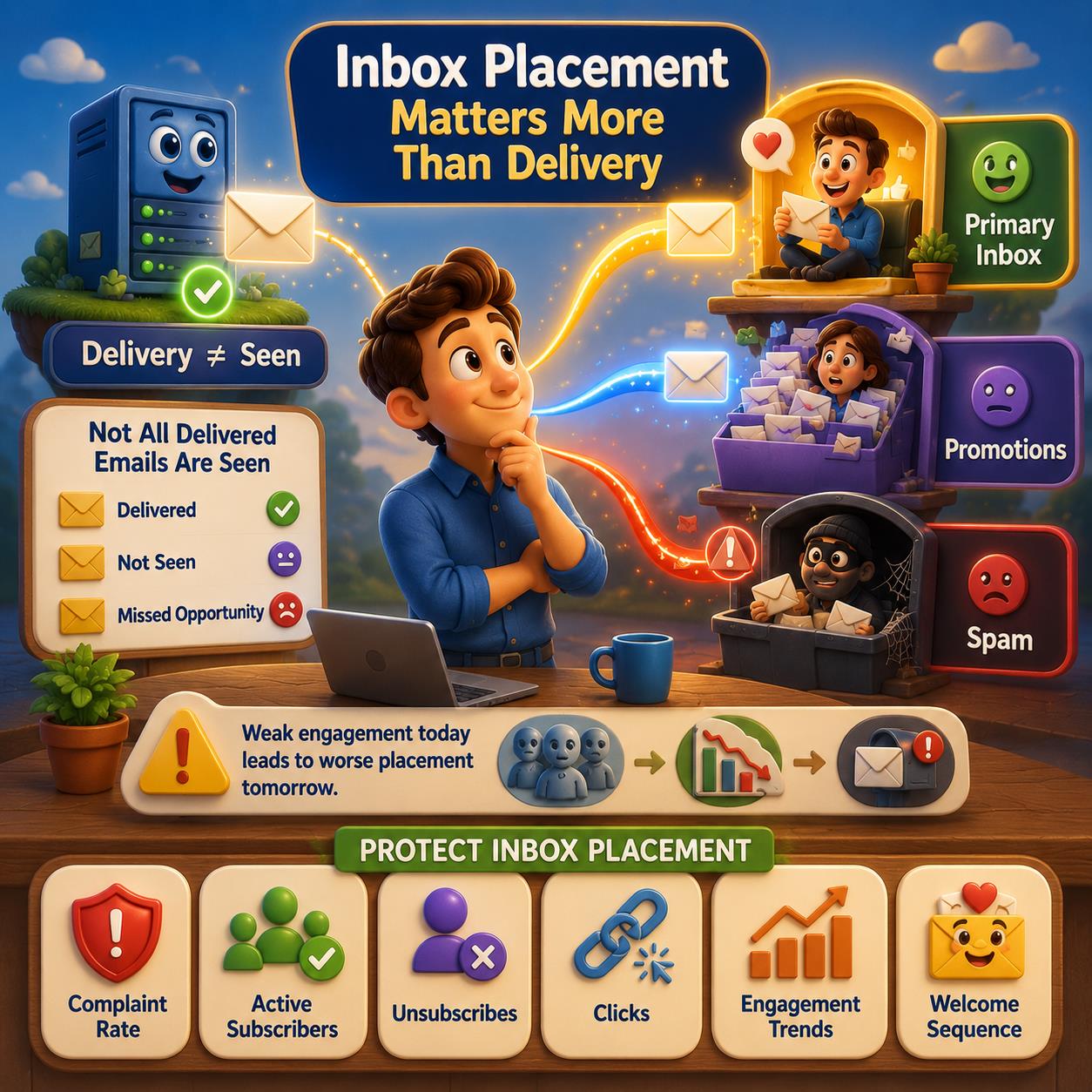
To protect inbox placement, monitor complaint rates, active subscriber percentage, unsubscribes, clicks, and engagement trends. A welcome sequence can also help because it reminds people why they signed up and sets expectations from the beginning.
The Smarter Email Strategy for the Future
The future of email marketing belongs to businesses that track real behavior.
Stop treating open rates as the final truth. Stop removing subscribers before you understand their buying cycle. Stop sending the same message to everyone.
Instead, segment based on behavior. Send different messages to people based on what they clicked, bought, downloaded, or showed interest in. Use win-back emails before sunsetting contacts. Focus on useful content that subscribers actually want.
Email is not dead. But old email habits are becoming expensive.
The businesses that win will be the ones that stop chasing fake engagement and start building email systems around real human action.

Frequently Asked Questions

Stop Sending Only Discounts: The Email Marketing Strategy
In today’s crowded inboxes, the last thing customers want is a constant stream of boring “20% OFF” emails. And yet, many brands still rely almost exclusively on discounts to drive sales.
Read Article →
Email Marketing Isn’t Dead – It’s Dominating
If you run an e-commerce brand—or even just sell a few products online—you’ve probably heard conflicting opinions about email marketing. Some claim it’s outdated, while others think it’s just a quick way to blast the same message to everyone on their list.
Read Article →