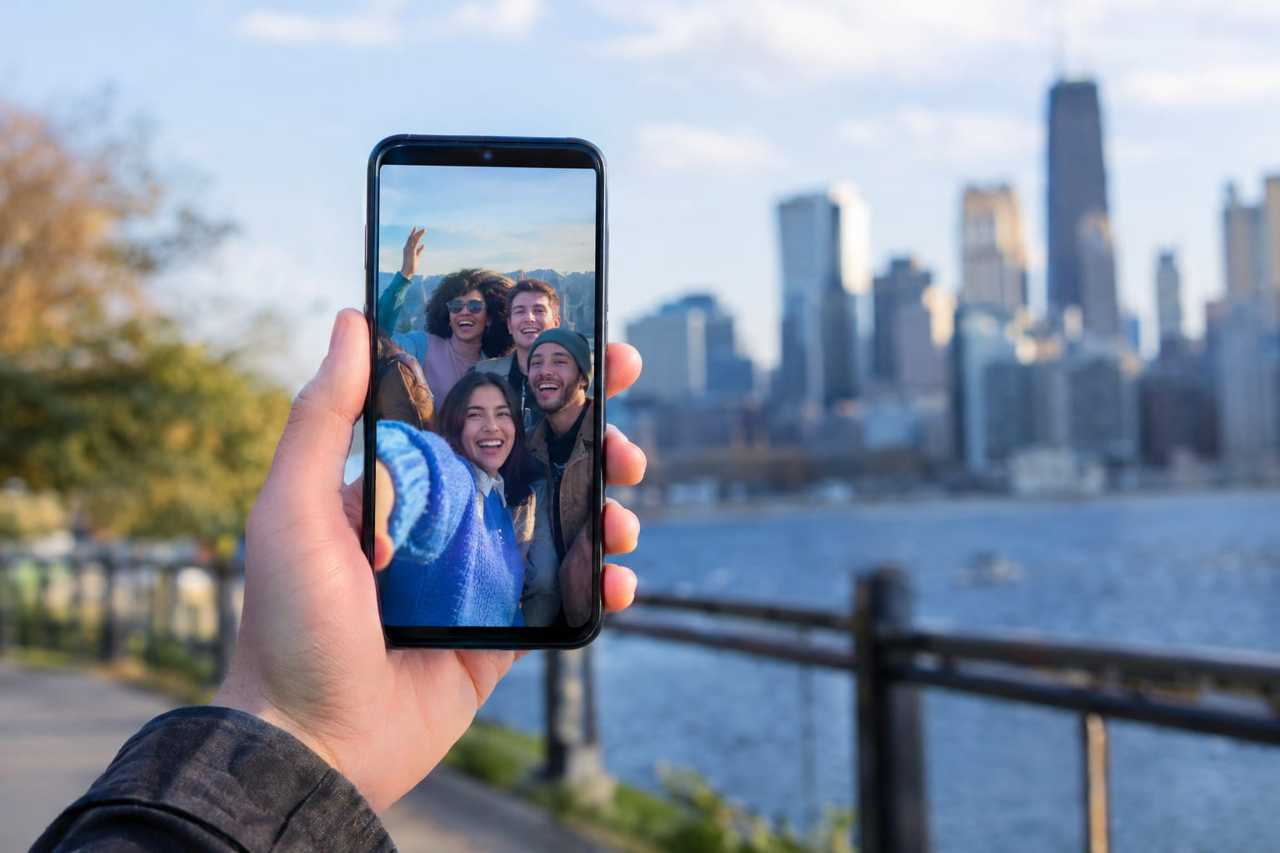
Ever wanted to star in a movie with your buddy without either of you leaving the couch? Google just made that weirdly possible.
Gemini, Google's AI assistant, announced on October 29, 2026 that its avatar feature now lets you share your digital self with friends. Create an avatar, invite someone by their Gmail address, and if they say yes, they can drop your face and voice into their own AI-generated images and videos. Do it both ways, and you can both end up in the same AI scene together.
I'll admit, that's a strange sentence to type. But stick with me, because this is more interesting than it sounds.
What an avatar actually is
Here's how it works. You sit down at a computer, go to gemini.google.com, and use your phone to record yourself. Gemini captures your face and your voice and turns that into a digital copy it can animate however you ask. Say "put me on a beach in Portugal" and there you are, digitally, lounging somewhere you may have never actually been.
This isn't brand new. Android Authority reported the avatar feature launched back in June, available only to people on Google's paid AI plans. But until now, it was a solo act. Your avatar only appeared in your own creations. Nobody else could use it, borrow it, or tag it in anything.
That changed with this update. And honestly, the idea had been hiding in plain sight for a while. Back in July, the tech site TuttoAndroid found references to shared avatars buried in the app's code. Sometimes these features sit in the backend for months before Google flips the switch. This time, the switch got flipped.
Why this matters more than it seems
Think about what this actually enables. Instead of generating an AI video alone, you can now tag a friend and have them show up in the scene with you. Two people, two invitations accepted, one shared AI-generated moment neither of you had to physically create.
That's a small shift with big implications. We've spent the last couple of years watching AI tools let individuals generate content solo. This is Google nudging that toward something social. Suddenly it's not just "look what I made," it's "look what we made together" — except neither of you had to be in the same room, or even on the same continent.
I think about this through the lens of someone who's been bouncing around the world since 2017. I've got friends scattered across a dozen time zones. We don't always get to share a physical space. But could we share a digital one? An AI-generated video where we're both standing on some landscape neither of us has actually visited yet, just for the fun of it?
That's the kind of "what happens if" question that gets me curious. Is this going to replace a real trip with real friends? Of course not. Nothing does. But as a quick way to connect, joke around, or test out an idea before committing to the real thing, it's worth poking at.
The fine print worth knowing
Before you run off to invite everyone you know, a few limits apply. You've got to be 18 and use a personal Google account, not a work or school one. The language has to be set to English. Video generation specifically requires a paid Google AI plan, so this isn't a free-for-all.
And if you're in the European Economic Area, Switzerland, or the United Kingdom, you're out of luck for now. Google hasn't rolled this out there yet, likely due to regulatory hurdles around likeness and data, though the announcement didn't spell out why.
So where does this go next?
Features like this tend to start small and expand. Today it's two friends swapping avatar invites. Tomorrow, who knows — group scenes, shared storylines, entire AI-generated reunions with people you haven't seen in years?
I'm not ready to predict exactly where this lands. But I am curious enough to try it myself once it's available where I am. That's usually how I figure out if something's actually useful or just a neat party trick.
Either way, it's one more sign that AI tools are moving from "make something alone" to "make something together." And that shift is worth watching.
Source: Pasquale Pillitteri
Our last article on this: Why Marketers Are Quietly Ditching ChatGPT for Claude