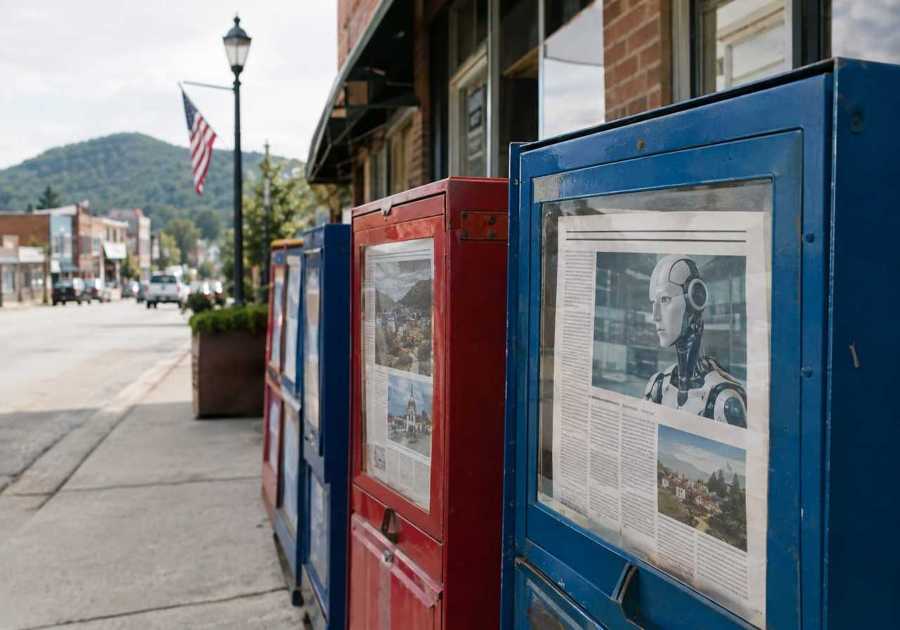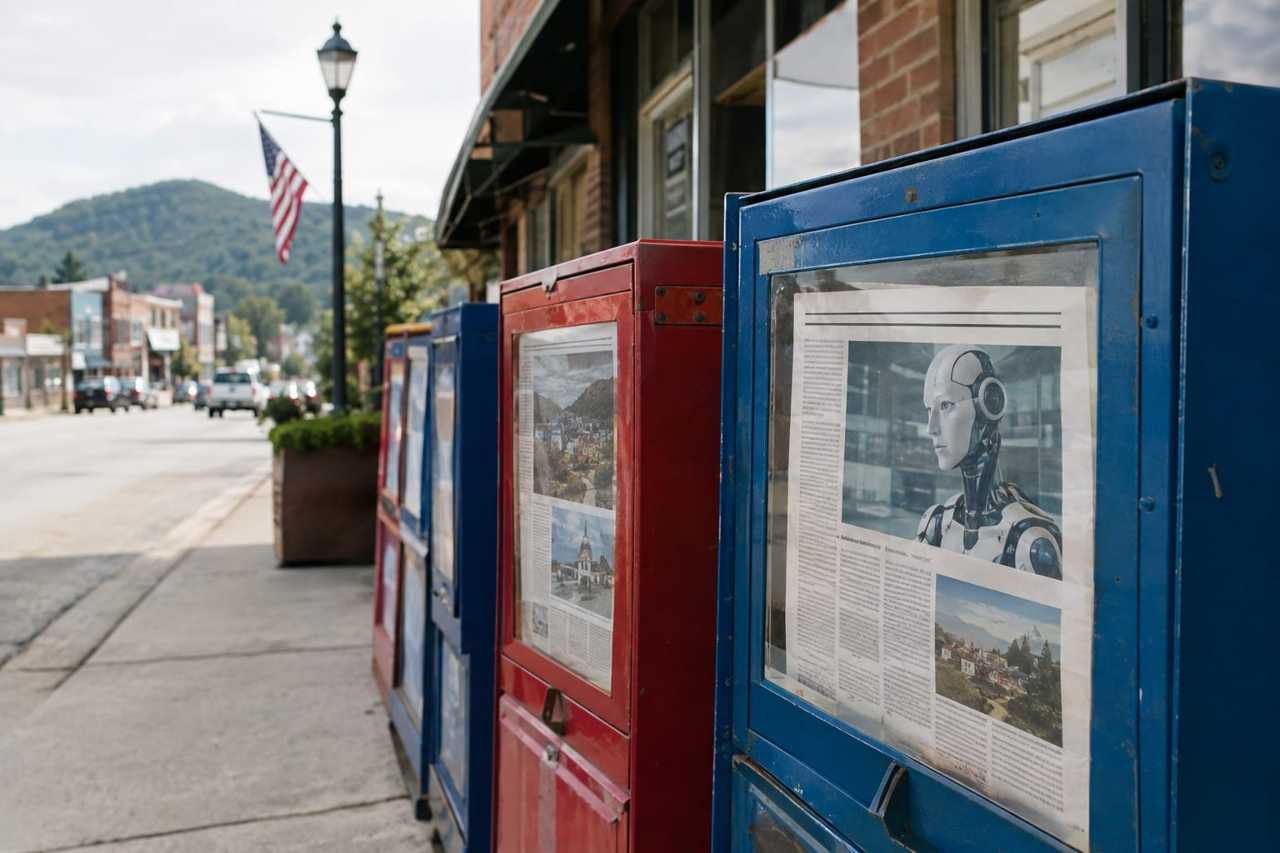
Here's a question worth sitting with: if a website looks like a newspaper, writes like a newspaper, and uses bylines like a newspaper — but no human actually reported the story — is it still news?
That's exactly what's happening in Lexington, Massachusetts right now. And it's probably happening near you too.
The Lexington Observer, a real nonprofit newsroom covering the town, went digging after noticing something odd. Several new websites had popped up covering Lexington — town meetings, school board updates, local events — that weren't run by anyone in Lexington at all. They found four of them: The Lexington-Concord Courier, and Lexington-specific pages on Nanopress, Townbrief, and GatherGov.
I've spent years relying on local information when I land somewhere new. When you're traveling full-time like I have since 2017, you learn fast which sources actually know a place and which ones are just guessing. Turns out, some of these sites aren't guessing — they're generating.
A Newsroom With No Reporters
The Lexington-Concord Courier bills itself as "independent local journalism." Ask Google's AI assistant what it is, and it'll confidently describe it as a news publication covering Lexington and Concord. Sounds legit.
Except the Courier is owned by a company called Surround Sound Media, which runs 175 of these "newsrooms" across the country — with just 12 humans managing all of them. The person responsible for Lexington's site, Cameron Joyce, is a recent University of Alabama grad based in Rhode Island who also manages 15 other local news sites and writes for a sports blog on the side.
Jesse Floyd, editor of the Belmont Voice, didn't mince words when the Observer asked him about it: "To put it bluntly, I think it's garbage."
Why? Because there's no one actually there. The Courier's AI can't interview anyone. One article about a Lexington High School building project — a topic residents have argued about for years — flat-out admitted the meeting's actual content "was not available at publication." That's not reporting. That's a placeholder pretending to be a story.
And here's the part that'd bother me most: the Observer found multiple instances where Courier appeared to republish ideas from their original reporting — a library resources piece, a story on a resident's research — days or weeks later, with no credit given.
Is "AI-Assisted" the Same as "Fake"?
Not every site in this story is the villain. That's what makes it interesting.
Nanopress, started by an Arlington resident, curates AI-written summaries from newsletters covering 163 Massachusetts towns. But it links to its sources and has real people you can actually email when something's wrong. Lexington writer Jeri Zeder told the Observer she's caught errors and watched Nanopress fix them. "There's a human hand and intelligence behind it," she said.
Compare that to the Midcoast Villager in Maine, which uses an AI tool just to transcribe and summarize town meetings — then hands that to actual reporters to decide what's newsworthy. Dan Kennedy, a journalism professor at Northeastern, called that "absolutely the right way to do it." AI as a tool, not a replacement.
That distinction matters a lot. I use AI tools myself to help organize research and speed up tedious parts of my own work. The difference is I'm still the one asking the questions, checking the facts, and putting my name on it. The moment a machine starts answering questions nobody asked, sitting in meetings nobody attended, you've crossed into something else entirely.
Why This Should Bug You, Even If You Don't Live in Lexington
The Society of Professional Journalists recently updated its code of ethics specifically because of this trend, adding language that journalists are, fundamentally, people. That's a strange thing to have to spell out.
Here's the bigger worry Floyd raised: if AI sites scrape real reporting, summarize it, and readers never click through to the original source, local newsrooms lose the traffic and ad revenue that keeps them alive. The real reporters — the ones actually sitting in that school board meeting, asking the next question — get squeezed out by sites doing none of the work.
The U.S. has lost more than a third of its newspapers in 20 years. But small nonprofit newsrooms have been popping up to fill the gap — real humans, in real towns, going to real meetings. That revival is worth protecting.
So next time you read a "local news" story, ask yourself: who actually wrote this? Who was in the room? If you can't answer that, maybe dig a little deeper before you believe it.
Source: The Lexington Observer
Earlier in this series: ChatGPT Just Became a Business Directory. Here's What That Means for Insurance.