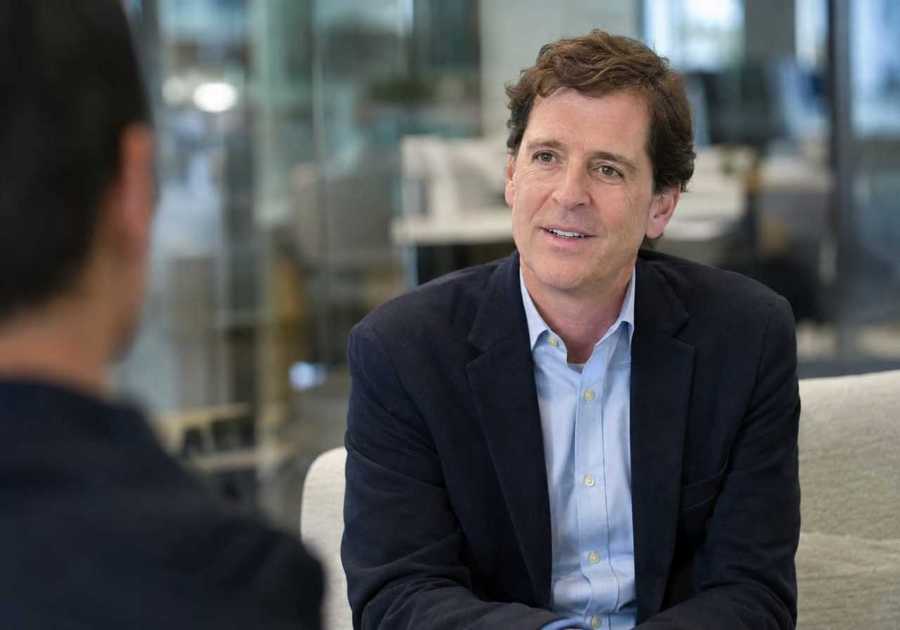
Brian Halligan built HubSpot. Then he left it. Now he's back running it, and he's calling it a "re-founding."
That's a strange word to use about a company you already founded once. But stick with me, because this story says a lot about what happens when a business bets everything on AI and the bet gets bumpy.
A CEO Gone, A Stock Down Nearly Half
Yamini Rangan stepped down as HubSpot's CEO and left the board on November 12, 2026, after five years in the job. She'll stick around through December 1 to help with the handoff, which is the corporate version of cleaning out your desk slowly.
Here's the part that should grab your attention: under Rangan, HubSpot actually grew. Customers went from 135,000 to more than 311,000. Revenue climbed from $1.3 billion to an expected $3.7 billion in 2026. By most measures, that's a win.
So why is she gone? The stock tells part of the story. HubSpot shares are down nearly 47% over the past year. Something wasn't landing with investors, even while the customer numbers looked good.
Halligan co-founded HubSpot back in 2005 with CTO Dharmesh Shah and ran it as CEO for 16 years before stepping aside in 2021. Now he's walking back into the corner office. On X, he announced the company is now the "Customer Harness Company," promised more details soon, and signed off with "LFG!" Shah echoed him on LinkedIn, talking about "rethinking and reimagining" HubSpot for the AI age.
Layoffs, Lawsuits, and a Pricing Experiment That Didn't Go Smoothly
This didn't come out of nowhere. HubSpot has been scrambling to reposition itself as an "Agentic Customer Platform" ever since a potential acquisition by Google fell apart in mid-2024. Since then, the company has made three acquisitions and pushed out more than 100 product updates in about 18 months. That's the pace of a company that knows the ground is shifting under it.
In June 2026, HubSpot bought Warmly for visitor identification tools. In July, it launched Agent Hub in beta. By September's UNBOUND event, it had rolled out its Breeze Assistant, a self-updating Smart CRM, and new connectors tying into both ChatGPT and Anthropic's Claude.
But the operational side got messy. In April, HubSpot switched two of its Breeze agents from the old per-seat pricing to pay-per-result pricing. That's a big structural change for a company whose whole business model was built on seats. An August guidance cut triggered a securities-law investigation. Then in October, Rangan announced layoffs of about 660 people, roughly 7% of the workforce, while reorganizing teams around customer outcomes instead of departments.
A month after those layoffs, the CEO who ordered them is gone too.
HubSpot also named Karen Burgess, currently SVP and CFO of Adobe's Creativity & Productivity unit, as its next CFO. She starts November 30 and takes over fully by February 11, 2027, succeeding retiring CFO Kate Bueker. HubSpot says its fourth-quarter and full-year 2026 guidance hasn't changed.
Why I Think This Matters Beyond HubSpot
I've run businesses. I know the itch that hits when something you built starts feeling unfamiliar, like it's drifting from what made it work in the first place. Halligan clearly felt that itch badly enough to come back and call it "day one" again, even after 16 years already in that chair.
What strikes me is how fast the AI wave is forcing companies to rebuild their own foundations, not just bolt on new features. HubSpot isn't alone. Adobe's CEO Shantanu Narayen just announced his own departure after 18 years, a run that took Adobe from under $1 billion to more than $25 billion in revenue. Across the customer experience software world, analysts are watching the same pattern: companies shifting from being record-keeping tools to something closer to strategic decision-makers, with nobody quite sure yet who owns that new territory inside these companies.
That uncertainty is the real story here. When the tools your business runs on start making decisions instead of just storing data, the org chart doesn't know what to do with that yet. Neither, it seems, did HubSpot's board.
What Happens Next
Halligan promised more on his plans "in the next few days." I'll be curious whether "re-founding" means real structural change or just a fresh coat of paint on the same products.
Either way, it's a reminder that even companies that look like they're winning on paper can decide the paper isn't telling the whole story. Sometimes the boldest move isn't building something new. It's going back to rebuild what you already made.
Source: CMSWire
Catch up on our earlier post: Maybelline Just Turned ChatGPT Into Your Makeup Mirror