In today’s digital-first economy, social media is no longer optional for small businesses—it’s essential. Platforms like Instagram, Facebook, YouTube, and LinkedIn have changed how people discover brands, research products, and decide who to trust.
For small businesses, social media offers a powerful and cost-effective way to compete with larger companies, connect directly with customers, and build long-term growth. When used strategically, social media becomes more than just a posting platform—it becomes a consistent driver of awareness, trust, and website traffic.
Increased Brand Awareness Without a Big Budget
One of the biggest advantages of social media is visibility. In the past, reaching new customers required expensive advertising through television, radio, or print. Today, a single social media post can introduce a small business to hundreds or even thousands of potential customers.
Social platforms are built for discovery. Hashtags, shares, recommendations, and algorithms help content reach people who may have never heard of a business before. This gives small businesses the opportunity to grow brand awareness organically, even with limited resources.
Consistency plays a key role here. When a business shows up regularly with helpful, educational, or engaging content, people begin to recognize the brand and associate it with a specific solution or expertise.
Building Trust and Credibility
Trust is one of the most important factors in purchasing decisions. Customers want to feel confident that a business is legitimate, knowledgeable, and reliable—and social media helps build that confidence over time.
By sharing educational content, behind-the-scenes insights, customer experiences, and practical tips, small businesses can humanize their brand. Instead of appearing faceless, they become approachable and relatable.
Social media also allows businesses to demonstrate authority. When a brand consistently answers common questions, explains concepts clearly, and provides value without always selling, it positions itself as a trusted resource. Over time, followers are more likely to choose that brand when they’re ready to buy.
Direct Communication With Customers
Social media removes the barrier between businesses and customers. Comments, direct messages, and replies allow real-time interaction that wasn’t possible with traditional marketing channels.
This direct communication strengthens relationships. Customers appreciate quick responses, acknowledgment, and transparency. For small businesses, this level of accessibility can be a major advantage over larger brands that feel distant or automated.
Beyond relationship building, these conversations also provide insight. Questions, feedback, and engagement reveal what customers care about most—information that can guide content, product development, and overall strategy.
Driving Traffic to Websites and Online Stores
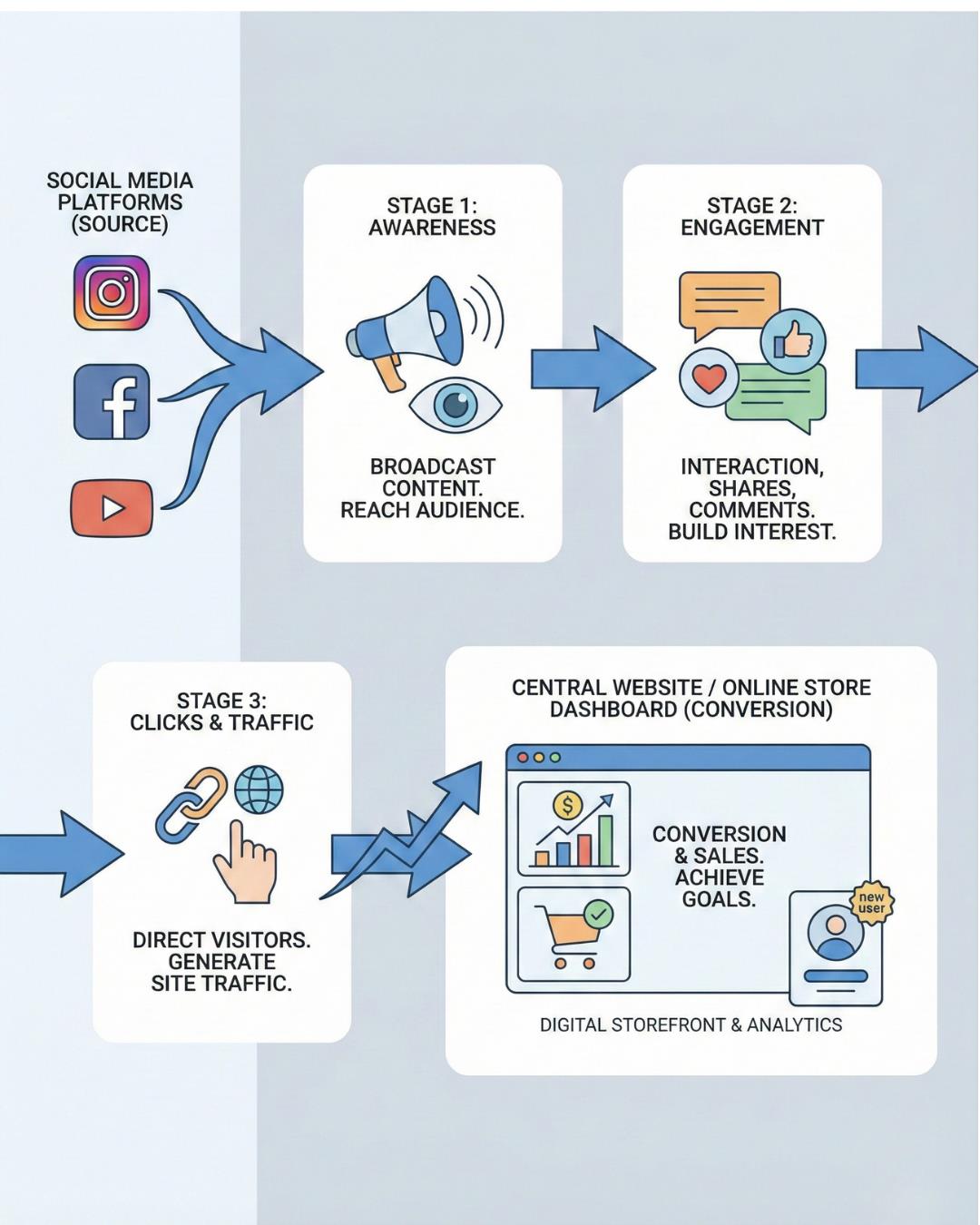
One of the most valuable benefits of social media for small businesses is its ability to drive traffic to websites and online stores. Every post, story, or video is an opportunity to guide users toward a landing page, blog article, product listing, or contact form.
Educational and problem-solving content works especially well. When a business helps people understand a problem or explore solutions, it naturally encourages them to click through to learn more. Over time, this creates a steady flow of visitors who are already interested and informed.
For businesses focused on long-term growth, staying informed about digital tools and content opportunities is just as important as posting consistently. Curated content feeds can help business owners discover new ideas, trends, and strategies that support ongoing website engagement.
One useful example is discovering curated digital content that supports website traffic growth, which highlights how content aggregation can help small businesses stay visible, informed, and competitive online.
Unlike one-time ads, organic social media content can continue driving traffic long after it’s published, especially when posts are saved, shared, or resurfaced by platform algorithms.
Cost-Effective Marketing With Strong Returns
Marketing budgets are often limited for small businesses, which makes cost efficiency critical. Social media offers one of the best returns on investment compared to traditional advertising.
Organic content can be created with minimal cost, using simple formats like graphics, short videos, or educational posts. Even paid social media ads tend to be more affordable and targeted than traditional media, allowing businesses to reach specific audiences based on location, interests, or behaviors.
Another major advantage is flexibility. Businesses can test different content styles, messages, and calls to action, then adjust based on performance. This ability to learn and optimize quickly helps small businesses make smarter marketing decisions without large financial risk.
Supporting Customer Education and Better Decisions
Most customers don’t buy immediately. They research, compare, and look for reassurance before making a decision. Social media plays a crucial role in this process.
By sharing how-to guides, comparisons, FAQs, and educational posts, businesses help customers understand their options. This reduces confusion and builds confidence in the buying decision.
For small businesses, this is especially powerful. Social media allows them to guide potential customers step by step, positioning their products or services as practical solutions to real problems rather than pushing hard sales messages.
Building Community and Customer Loyalty
Beyond traffic and sales, social media helps small businesses build communities. When people engage with a brand consistently, they begin to feel connected to it.
Responding to comments, acknowledging feedback, and sharing customer experiences creates a sense of belonging. Loyal customers are more likely to return, recommend the brand to others, and support it long term.
Over time, this community becomes a powerful growth engine. Shares, word-of-mouth recommendations, and repeat engagement extend a business’s reach far beyond its original audience.
Social media has transformed how small businesses grow and compete. It offers visibility, trust-building, direct communication, and traffic-driving power that was once only available to large companies with big budgets.
When used strategically, social media becomes more than a promotional tool—it becomes a foundation for sustainable growth. By showing up consistently, providing real value, and engaging authentically, small businesses can use social media to build trust, attract the right audience, and drive meaningful results in today’s digital world.