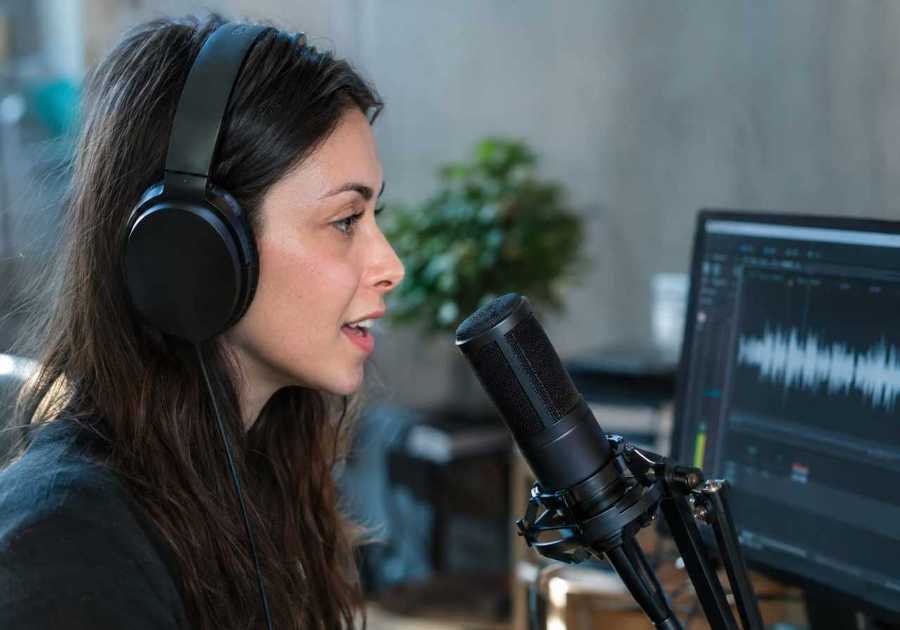
Here's a question that's been bugging me for a while: what actually is a voice?
Not the sound coming out of your mouth. The other kind. The thing that makes a company's emails sound like that company, and not like every other company blasting out the same "We're thrilled to announce..." nonsense.
Wysera, a startup that just hit the news through USA Today, thinks it's cracked the code. They've launched an AI agent that writes marketing content in a company's own voice. Not generic AI-speak. Your voice. Or at least, that's the pitch.
What Wysera Is Actually Doing
The idea is simple enough. Instead of feeding a chatbot a prompt and getting back the same flavorless corporate mush everyone else gets, Wysera's agent studies how a specific company actually talks. Its tone, its rhythm, its quirks. Then it writes marketing content that sounds like it came from inside that company, not from a server farm somewhere.
That's a real problem Wysera is trying to solve. Anyone who's spent time around AI-written content knows the tell. It's polished. It's correct. And it's dead on arrival. Every sentence sounds like it was written by committee, because in a way, it was.
So the question worth asking is: can a machine actually learn a voice, or can it only imitate the surface of one?
I Have Skin in This Game
I write for a living. Every article on this site is supposed to sound like me sitting across a table from you, talking. That's the whole deal. If I started sounding like a press release, you'd know something was off, and you'd be right to stop reading.
So when I hear "AI writes content in your own voice," my first reaction isn't excitement. It's curiosity mixed with a healthy dose of skepticism. I want to know: what happens if you actually try this? Does it hold up after the tenth article, or does the mask slip?
Here's what I think is true. A voice isn't just word choice. It's what you choose to notice. It's the specific story you tell instead of the generic one. It's the moment you admit you got something wrong, or the detail you throw in because it made you laugh. An AI can study your past hundred blog posts and learn your sentence length and your favorite words. Can it learn why you cared enough to write them in the first place? That's a different thing.
Why This Matters If You Run a Business
If you're a small business owner, a solo founder, or anyone who's ever stared at a blank screen trying to write a newsletter at 11pm, tools like this matter. Most companies don't have a dedicated writer. They have a founder who's exhausted, wearing twelve hats, and the marketing content is the thing that falls off the truck first.
An AI agent that can actually hold a consistent voice across emails, social posts, and website copy could save real time. That's not nothing. Time is the one thing you can't buy back, no matter how many hats you're wearing.
But here's my advice, for whatever it's worth. Treat it like a tool, not a replacement. I've traveled full-time since 2017, and the one lesson that keeps repeating itself in every corner of life is this: automation is great for the repetitive stuff, and useless for the stuff that actually requires a human being to have lived something. Let the AI draft the structure. You still have to be the one who decides what's worth saying.
What Happens Next
Wysera is betting that the gap between "AI-generated" and "authentically yours" is closable. Maybe it is. I'm not ready to hand over my table-across-from-you voice to an algorithm just yet, but I'm curious enough to watch how this plays out.
If you're running a business and drowning in content you don't have time to write, tools like this are worth a look. Just don't stop checking whether it still sounds like you. Because the moment it doesn't, your readers will notice before you do.
Source: USA Today
Catch up on our earlier post: Why a Fake Josh Shapiro Can Legally Talk About His "Scandals" on Pennsylvania TV