
Starting an affiliate marketing business used to feel painfully slow. You had to build a website, research a niche, write dozens of articles, create videos, join affiliate programs, and wait months before anything meaningful happened.
Many beginners quit before they ever saw results.
Today, AI has changed the timeline. It cannot do the entire business for you, and it will not magically create trust or revenue overnight. But it can help you move faster. Instead of spending six months just setting up, you can build a real foundation in weeks and spend the next two months testing traffic, improving content, and learning what converts.
The new affiliate game is not about perfection. It is about speed, validation, and consistent execution.
Phase One: Pick a Niche You Can Actually Win
The first mistake many beginners make is choosing a niche that is too broad or too competitive. Personal finance, medical topics, and giant software categories may have strong income potential, but they are often dominated by authority sites.
A smarter move is to find a specific subniche with real demand, buyer intent, and room for smaller creators to compete. Good affiliate niches usually have search volume, product categories, multiple affiliate programs, and clear “best product” keywords.
This matters because affiliate marketing is largely search-driven. People search Google and YouTube for reviews, comparisons, and recommendations before they buy. Keywords like “best camping tents,” “best skincare tools,” or “best email marketing software” often signal that someone is close to making a purchase.
The goal is to choose a niche where smaller blogs or YouTube channels are already getting traffic. If they can compete, you may be able to compete too. The reference material emphasizes validating demand, competition, and affiliate opportunities before building the business.
Phase Two: Build Fast, Not Perfect
Once the niche is chosen, the next step is building the basic infrastructure.
This does not need to be fancy. A clean website, simple homepage, about page, contact page, and core affiliate setup are enough to begin. If you are focusing on YouTube, a website can still help organize affiliate links, recommended products, and supporting content.
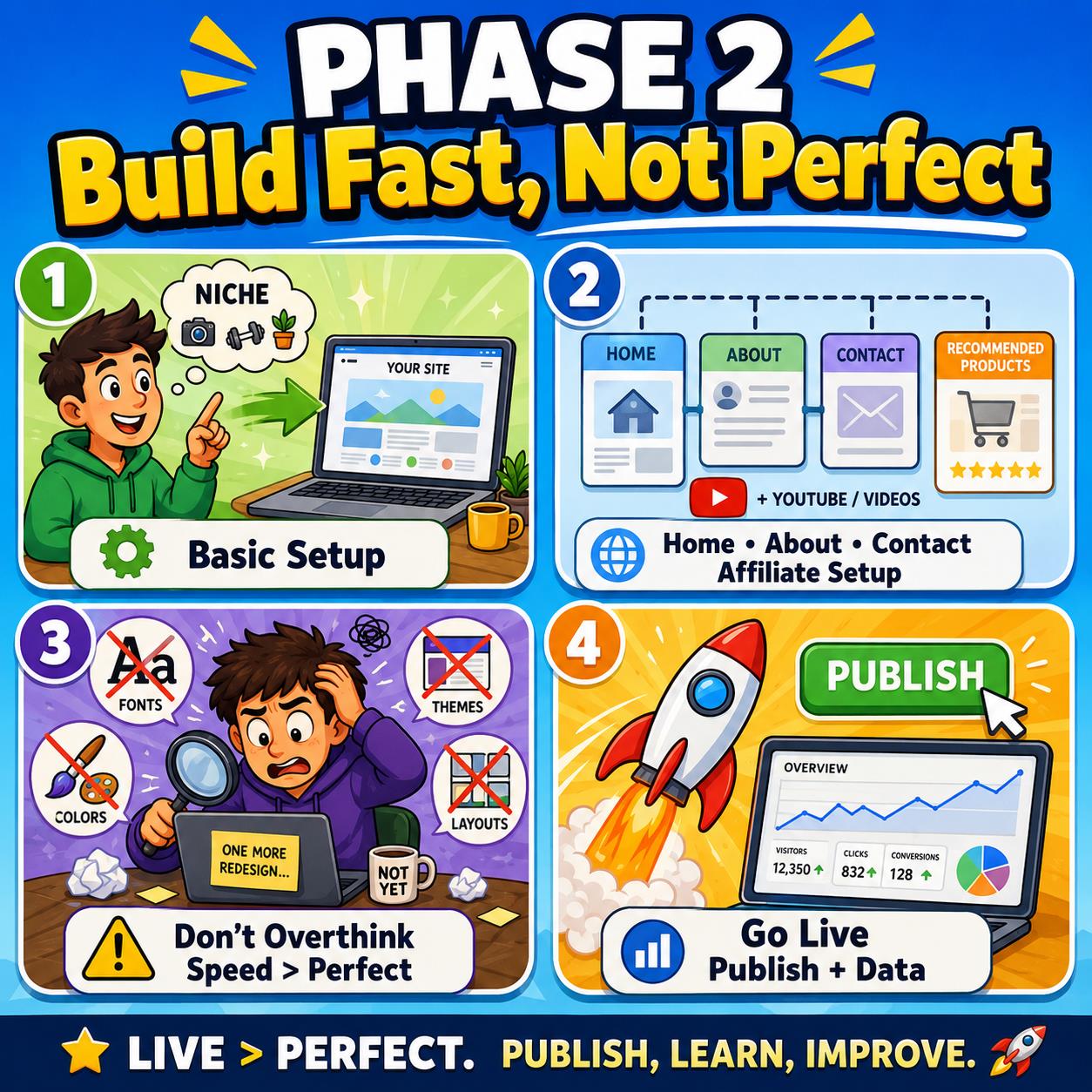
The trap is perfectionism. Many people waste days choosing fonts, changing themes, or redesigning pages no one has visited yet. At the beginning, speed matters more than polish.
The goal is simple: get the foundation live so you can start publishing and collecting data.
Phase Three: Create a Content Foundation
Content is the engine of affiliate marketing.
With AI, you can create outlines, article drafts, video scripts, content clusters, and keyword plans much faster than before. But this does not mean you should publish generic AI content. That is where many people fail.
AI should handle the heavy lifting. You should add the human layer: personal insight, examples, experience, product knowledge, original opinions, photos, comparisons, and honest recommendations.
A strong affiliate content plan usually includes product reviews, “best of” articles, comparison posts, tutorials, and buying guides. These pieces help readers understand their options and make smarter decisions.
Instead of covering everything at once, build topical authority one cluster at a time. If your niche is camping, start with tents. Write about best camping tents, family tents, four-season tents, tent setup, and tent buying tips. Then move to the next product cluster.
Phase Four: Drive Traffic and Study the Data
After publishing, the work shifts to traffic and optimization.
For blogs, submit your sitemap to Google Search Console, request indexing for important pages, build basic backlinks, and continue publishing consistently. For visual niches like recipes, home decor, fashion, travel, or fitness, Pinterest can also help drive early traffic.
For YouTube, focus on search-driven videos. Reviews, comparisons, tutorials, and product demonstrations can convert well because viewers are actively researching.
At this stage, the goal is not massive revenue. The goal is learning. Which topics get traffic? Which videos get views? Which affiliate links get clicks? Which products convert?
The data tells you what to double down on.
Phase Five: Scale What Works
By the third month, you should have signals.
If one article or video starts performing, create related content around it. If one product category gets clicks, expand it with more comparisons, reviews, and buying guides.
Then improve conversions. Add clearer affiliate buttons, comparison tables, pros and cons sections, callout boxes, and stronger calls to action. Test different affiliate programs too, because some products convert better than others.
"Affiliate marketing is not just about creating content. It is about becoming a helpful recommendation source."
— Scott

Affiliate marketing is not just about creating content. It is about becoming a helpful recommendation source.
The Real Secret Is Not Quitting Too Early
The people who win in affiliate marketing are not always the ones with the biggest budget or perfect content. They are often the ones who choose a realistic niche, publish useful content, study the data, and keep improving.
AI can compress the setup timeline, but consistency still matters.
In 90 days, you may not build a full-time income. But you can build the foundation, validate your niche, earn early clicks, and prove whether the model has potential.
That is the real shortcut: stop overthinking, start testing, and let the data show you what to build next.

Frequently Asked Questions
Can affiliate marketing really be started in 90 days?
Yes, a basic affiliate marketing business can be launched in 90 days if you focus on niche validation, fast setup, consistent content creation, and early traffic testing. The goal is not instant riches. It is to build a working foundation and gather real performance data.
What is the biggest mistake beginners make with affiliate marketing?
The biggest mistake is choosing a niche that is too broad, too competitive, or not connected to buyer intent. Beginners often chase big markets instead of finding smaller subniches where people are searching for reviews, comparisons, and “best product” recommendations.
Why is content so important in affiliate marketing?
Content builds trust, attracts search traffic, and helps people make buying decisions. Reviews, comparisons, tutorials, and buying guides can connect helpful information with relevant affiliate products. The more useful and targeted the content is, the better chance it has to drive clicks and commissions.

AI Search Is Coming for Your Traffic — Here’s How to Make
AI-driven search is changing how people find answers online. Instead of typing a question into Google and clicking through several websites, users can now ask tools like ChatGPT, Google AI Overviews, Perplexity, or Claude and receive a direct response in seconds.
Read Article →
SEO Is Not Dead — It Just Learned How to Travel
SEO used to feel more predictable. You wrote a helpful article, optimized it for the right keyword, built authority, and worked your way toward page one.
Read Article →