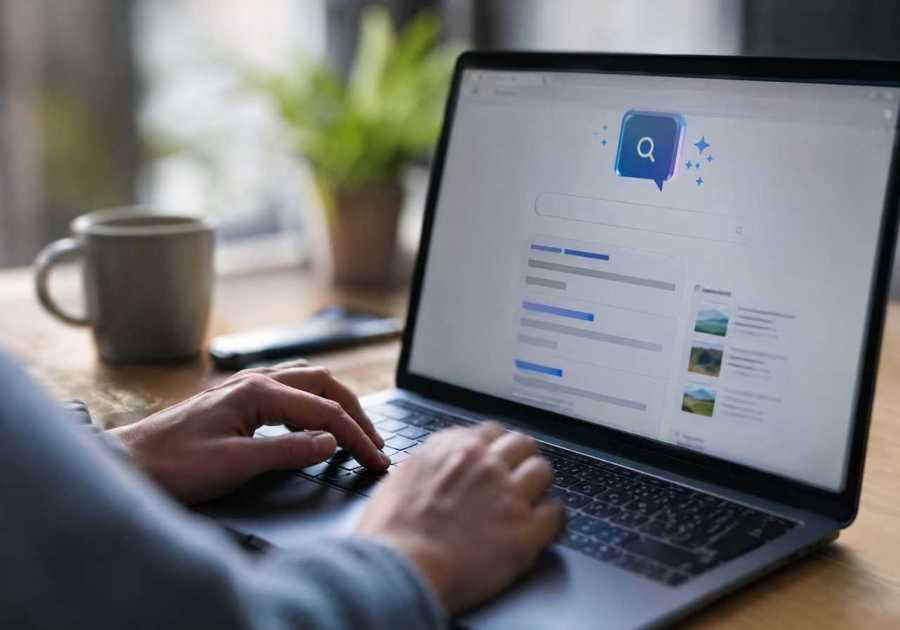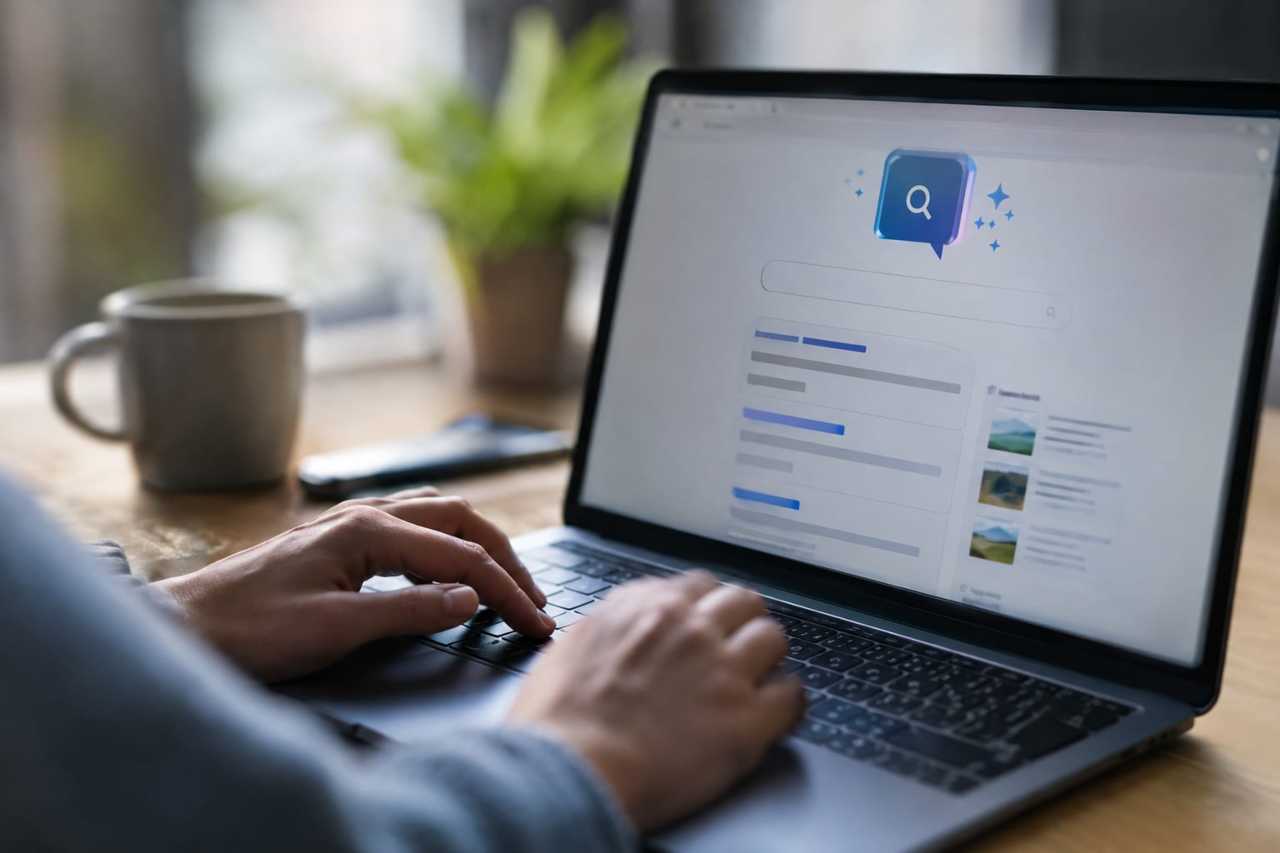
Here's a weird puzzle Google just handed every website owner on the planet: you can now see exactly how often your content shows up in AI Search. You just can't tell if that actually sent anyone to your site.
I run a website. I write stories people read. And like anyone who publishes online, I want to know where my readers are coming from. So when I heard Google rolled out a new tool for tracking AI visibility, I got curious. Turns out the answer is messier than it sounds.
What Google actually built
Back in June 2026, Google announced something called the Generative AI Performance Report, and it went live globally by the end of August. It lives inside Search Console, the free tool website owners already use to check how their site performs in Google.
The new report shows you impressions across AI Overviews and AI Mode — those AI-generated answers that now sit on top of a lot of search results. You can see which pages of yours are showing up, in which countries, on which devices.
Sounds great, right? Finally, a window into the AI side of search.
Except there's a catch. A big one.
The part Google left out
The report doesn't show clicks. It doesn't show click-through rate. It doesn't tell you how many searches led to those impressions in the first place.
When someone does click a link inside an AI Overview or AI Mode response, that click gets dumped into the same bucket as all your regular organic search traffic. No separate category. No way to pull it apart.
So picture this: your page starts appearing in AI responses three times as often as last month. Great news? Maybe. Or maybe nobody's actually clicking through, and your "visibility" is really just your content getting summarized and handed to the reader without ever bringing them to your door.
You can't tell the difference. Nobody can right now.
Why this matters more than it sounds
I've spent years building an audience by paying attention to data — what works, what doesn't, what people actually read versus what gets ignored. That habit of testing and adjusting is pretty much how I've approached everything since I started traveling full-time in 2017. Try it, measure it, learn, move.
But you can't adjust what you can't measure. And that's exactly the hole here.
For publishers running ad-supported sites, this isn't a small thing. If AI answers are quietly eating into clicks while impressions climb, that's a business problem disguised as a visibility win. Marketing and SEO teams are now stuck comparing apples to a fruit nobody's defined yet.
Google even addressed referral headers directly, in documentation posted November 12, explaining how site owners can trace visits back to Google Search through analytics and server logs. Still no separate tag for AI Mode or AI Overviews. Same bucket, same blur.
Zoom out, and the bigger shift is obvious
This measurement gap isn't happening in isolation. Sundar Pichai, Alphabet's CEO, said on a recent earnings call that AI Mode queries now run about three times longer than a typical search. One in five AI Mode searches globally involves voice, an image, or a document — not just typed text. Google's visual search alone is now topping 50 billion searches a month.
Pichai also talked about where this is headed: Search that doesn't just answer questions but takes action — booking a reservation, filling out a form, making a purchase, right from the search interface. The Gemini app just crossed one billion users. Google's AI models are processing nearly 32 billion tokens a minute, up 40% from last quarter and four times what it was a year ago.
That's not incremental change. That's the whole search experience getting rebuilt in real time.
So what do you do with that?
If you run a website, a business, or a blog you care about, don't assume AI visibility equals traffic. Test other signals. Watch your overall numbers, not just the shiny new report. Ask Google the obvious question — when's separate AI click data actually coming? — and keep asking until someone answers.
I've learned the hard way that waiting for a platform to hand you clarity rarely works. You go find it yourself, through experiments, through watching what actually happens instead of what you're told should happen.
Google opened a door here. It just hasn't turned the light on yet.
Source: Storyboard18
Still catching up? Start with TikTok Just Gave One Creator Platform Its Stamp of Approval. Here's Why That Matters to You.