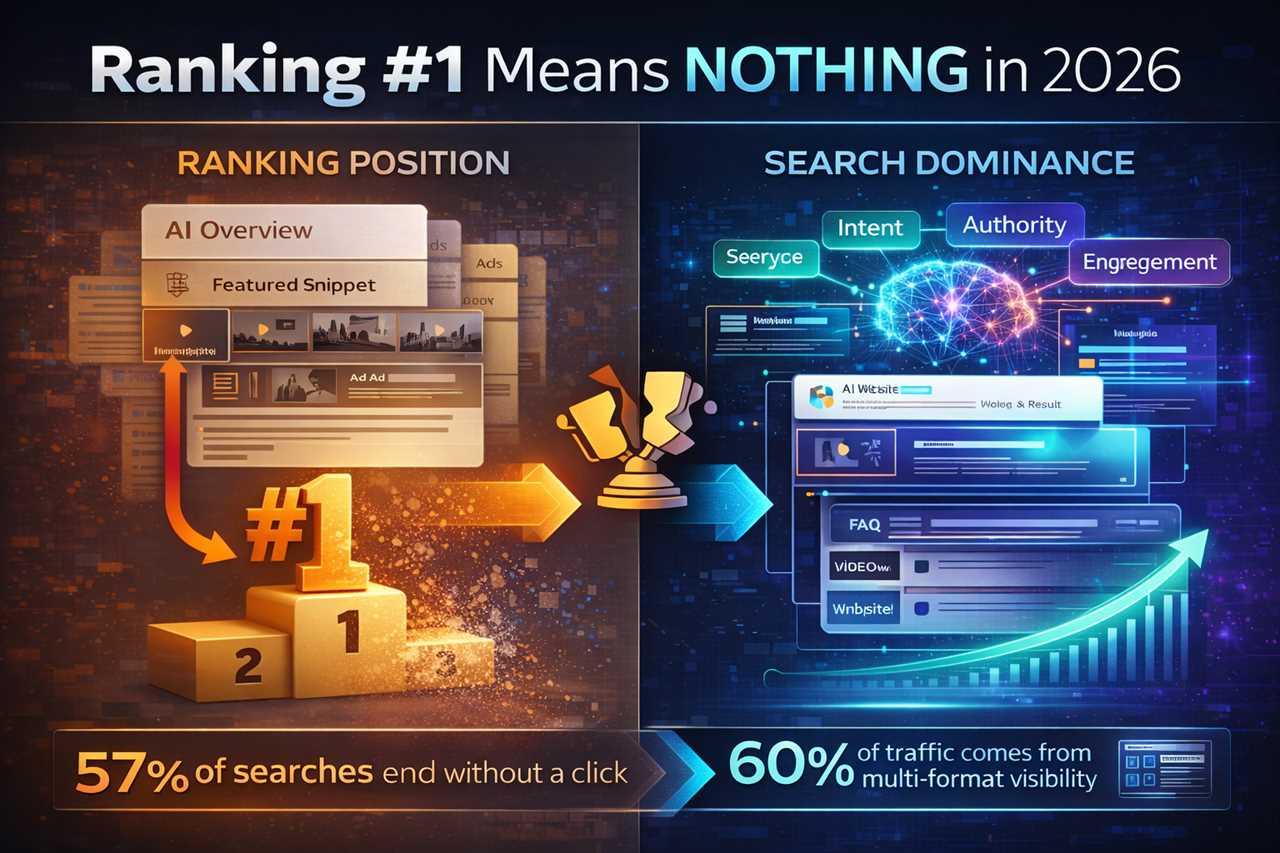
For years, businesses obsessed over one goal: ranking number one on Google. It was the ultimate badge of digital success. Agencies sold it. Clients demanded it. Reports celebrated it. But in 2026, ranking #1 does not guarantee traffic, leads, or revenue the way it once did. In fact, in many cases, the top position is no longer the most valuable real estate on the page.
Search behavior has fundamentally changed. According to recent industry studies, more than 57% of Google searches now end without a click. These are known as “zero-click searches,” where users get their answers directly from AI-generated summaries, featured snippets, knowledge panels, or other on-page search features. That means even if you rank #1 organically, users may never visit your website.
The Rise of Zero-Click Searches
Zero-click searches are one of the biggest reasons ranking #1 means less than it used to. Data from multiple analytics reports indicates that nearly 60% of informational queries now provide answers directly in search results. If a user asks, “What is SEO?” or “How long does it take to rank on Google?” they may receive a concise AI-generated response before ever scrolling.
This shift changes the value of traditional rankings. Being first is helpful, but only if users are motivated to click. If your content does not offer deeper insight beyond what appears in the summary, you lose potential traffic. The goal is no longer just ranking—it is creating content compelling enough to earn the click.
AI Overviews Are Redefining Visibility
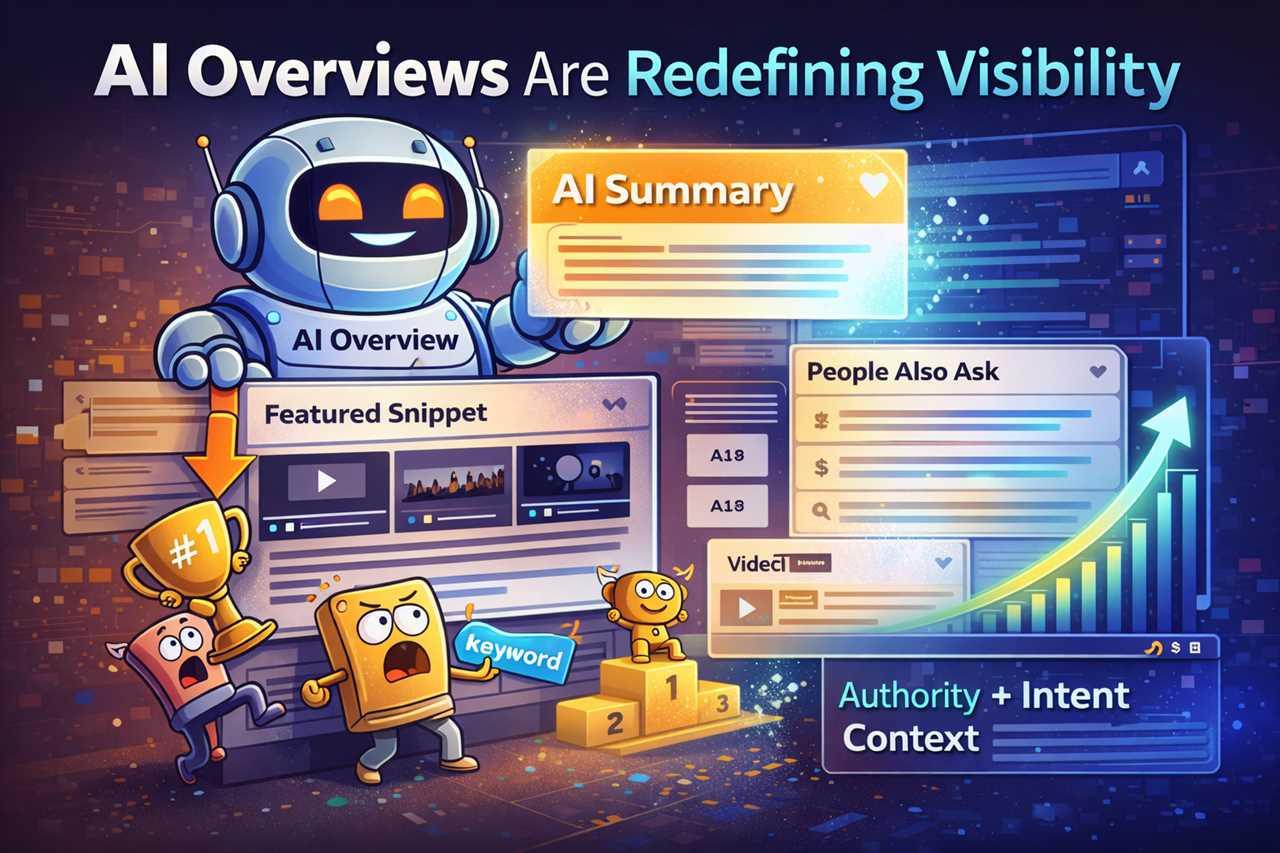
Artificial intelligence now plays a central role in shaping search results. Instead of matching keywords alone, search systems generate contextual summaries from multiple sources. These AI overviews often appear above organic listings, pushing traditional rankings further down.
Studies suggest that pages appearing within AI-generated summaries receive significantly higher visibility, even if they are not ranked first. This means authority, trust signals, and semantic relevance matter more than exact keyword positioning. Algorithms evaluate how comprehensively you cover a topic rather than where a phrase appears in your title tag.
If your SEO strategy is still centered around “How do we get to position one?” you may be focusing on the wrong metric. Modern search rewards topic authority and user satisfaction over isolated keyword wins.
Traffic Quality Beats Traffic Volume
Another reason ranking #1 means less in 2026 is the shift from traffic quantity to traffic quality. Businesses once equated high rankings with high revenue. However, analytics data shows that conversion rates depend more on user intent alignment than on ranking position alone.
For example, a page ranking third for a high-intent transactional keyword may convert better than a page ranking first for a broad informational query. Research indicates that visitors arriving from intent-aligned content are 2.5 times more likely to convert compared to general traffic.
This underscores a key lesson: ranking #1 for the wrong keyword can drive vanity traffic but minimal business impact. SEO in 2026 demands strategic alignment with audience needs, not just search volume.
If you want to understand why this shift is happening, continue reading
👉 SEO in 2026 Is Not About Keywords Anymore
Engagement Signals Matter More Than Position
Search engines now evaluate how users interact with your page after clicking. Bounce rate, dwell time, scroll depth, and repeat visits influence how algorithms interpret content quality. A page ranking #1 that fails to satisfy users may gradually lose its position to competitors offering more value.
Data shows that pages with strong engagement metrics maintain rankings 35% longer than pages optimized solely for keyword placement. This reinforces the idea that content depth and usability matter more than superficial optimization tactics.
SERP Features Are Stealing Attention
Search engine results pages now feature videos, FAQs, images, product carousels, and local listings. In competitive industries, these features dominate above-the-fold space. Even a top organic listing may sit below a video carousel or a sponsored placement.
Research reveals that video results alone can capture up to 25% of clicks for certain queries. Featured snippets also attract a significant share of attention, often reducing clicks to standard organic listings.
This reality means SEO success requires diversification. Optimizing for rich results, video content, and structured data is as important as traditional rankings. Businesses that adapt to these features gain multi-layered visibility, while those focused only on organic position lose ground.
The New Goal: Total Search Presence
In 2026, the goal is not simply to rank first. It is to dominate multiple touchpoints within search results. This includes appearing in AI summaries, featured snippets, related questions, video results, and traditional listings. A brand visible in multiple formats builds credibility and increases click-through rates.
Moreover, authority across a topic cluster increases the likelihood of sustained visibility. Instead of chasing isolated keywords, successful businesses create interconnected content ecosystems that signal expertise.
Ranking #1 may still carry prestige, but it is no longer the ultimate objective. Sustainable SEO performance depends on delivering value, building authority, and aligning with evolving search behavior.
The future of SEO is not about chasing the top spot. It is about earning meaningful visibility across the entire search experience.
Recommended Resources for AI Content Creation & Business Media Tools
Content is the fastest way to attract customers — and now, AI makes it easier than ever. These tools help you create professional videos, voiceovers, podcasts, and marketing content that make your business stand out and build trust instantly. You don’t need to be tech-savvy or hire expensive creators. With the right tools, you can produce powerful content in minutes and position yourself as the expert in your market. The businesses winning today are the ones creating content consistently. Take a look at the tools below and start creating content that brings you customers.
AI Video & Avatar Tools
HeyGen - Creates AI avatar spokesperson videos without filming.
ElevenLabs - Creates realistic AI voiceovers and voice cloning.
BizClips - Done-for-you business video creation service.
Podcasting, Video & Repurposing Tools
StreamYard - Live streaming studio for broadcasting and recording shows.
Castmagic - Turns podcasts and videos into blogs, posts, and marketing content.
YouTube Growth & Optimization
VidIQ - Helps grow YouTube channels using SEO tools and analytics.
Community & Course Platforms
Skool - Platform for building paid communities and online courses.
Hardware Tools
Maono Microphones - Professional microphones for podcasting and content creation.
Maono GamerWave Mic - USB microphone for podcasting, streaming, and recording.
Mindset & Personal Development
MindTrainer Pro - Programs designed to improve mindset, productivity, and success.