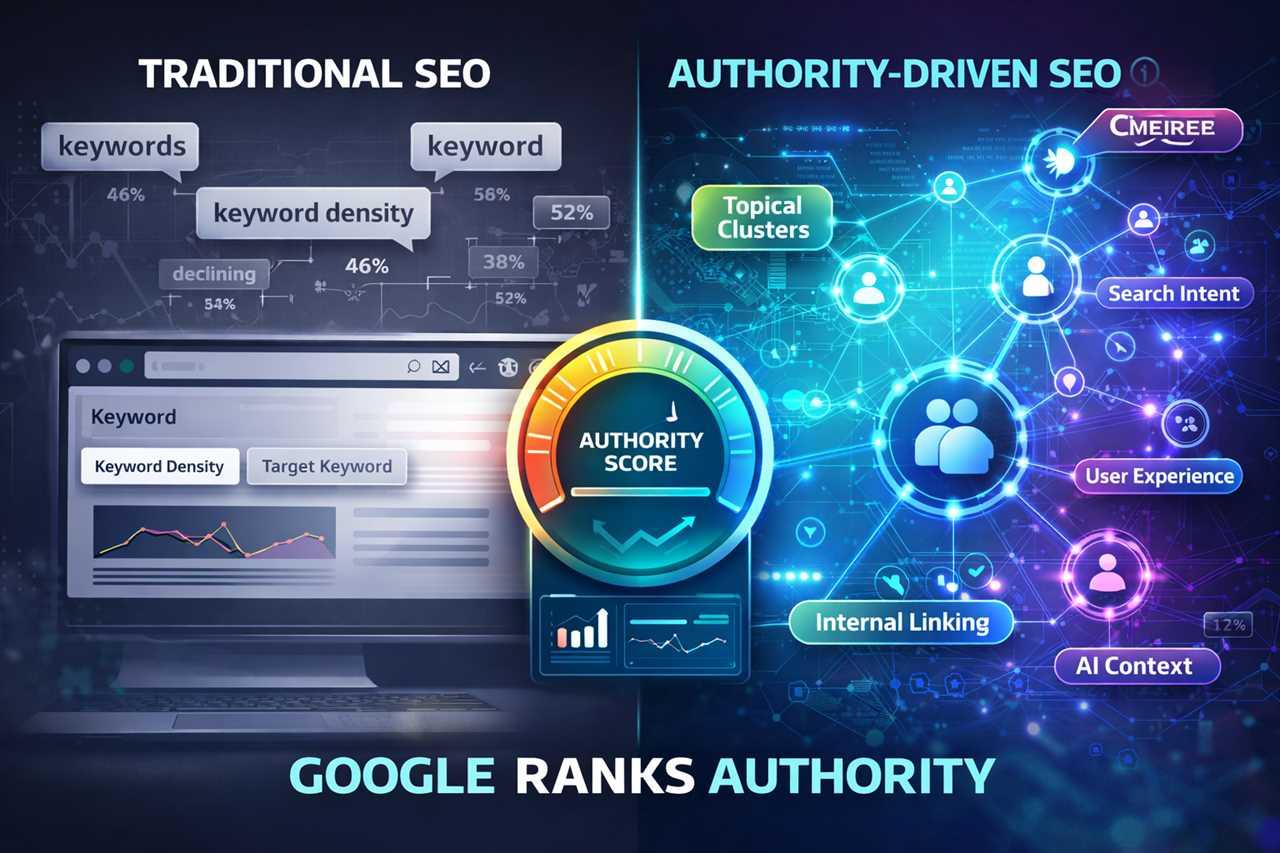
For years, business owners believed SEO success came down to optimizing individual pages. You chose a keyword, wrote a blog post, optimized your headings, added internal links, and waited for rankings. That approach worked when search engines relied heavily on keyword signals and backlink volume. But in 2026, that model has fundamentally changed. Google doesn’t rank websites based solely on pages anymore. It ranks authority.
Authority is no longer just a buzzword. It is the primary filtering system modern search engines use to determine who deserves visibility. With AI-powered search systems analyzing context, intent, and behavioral data at scale, isolated keyword optimization simply cannot compete with comprehensive expertise.
The Data Behind the Shift
Recent SEO studies reveal that over 72% of top-ranking pages belong to websites with demonstrated topical authority rather than standalone optimized articles. Another industry report found that websites structured around strong topic clusters experienced 38% faster organic growth compared to those publishing disconnected content. These numbers show a clear pattern: authority is outperforming keyword targeting alone.
Additionally, AI-driven search systems now evaluate content relationships across your entire domain. Algorithms measure whether your website consistently covers related subtopics, supports claims with depth, and maintains internal linking coherence. If you publish one high-performing page but lack supporting content that reinforces your expertise, rankings become unstable.
Search engines have also become more sensitive to user satisfaction signals. According to behavioral data studies, pages on authoritative sites retain visitors 41% longer than similar pages on low-depth domains. That extended engagement reinforces trust signals, strengthening ranking positions over time.
What Authority Really Means in 2026
Authority in 2026 is not just about domain age or backlink quantity. It is about structured expertise. If your business operates in digital marketing, for example, authority means covering SEO strategy, content optimization, analytics, conversion optimization, technical audits, and AI search impact in a cohesive ecosystem. Search engines now map content relationships like a knowledge graph. When your content demonstrates layered expertise, algorithms recognize you as a reliable source.
This is why isolated blog posts often fail to gain traction. A single well-written article without supporting context looks thin compared to a fully developed topic cluster. Authority is built through interconnected content, clear navigation, and consistent publishing within a focused niche.
Moreover, Google’s AI models now assess semantic depth. Instead of counting keyword occurrences, they analyze contextual coverage. A page discussing “improving online visibility” should naturally reference search intent, content quality, backlinks, user experience, structured data, and performance metrics. If those elements are missing, authority signals weaken.
The Impact of AI Search and Generative Results
The rise of AI-generated search summaries has accelerated the authority shift. Reports indicate that nearly 60% of search queries now trigger AI-generated previews before organic results. These previews rely heavily on trusted sources. If your website lacks authority signals, your content may not even be referenced in these summaries.
This creates a new visibility threshold. Instead of competing for position ten versus position five, businesses are competing for inclusion in AI-selected source pools. Authority determines whether your content is eligible.
Furthermore, generative search systems cross-reference multiple trusted domains to synthesize answers. If your content is consistently cited within your niche and reinforced by strong topical clusters, your authority compounds. If not, your pages remain peripheral.
Why Keywords Alone Are Not Enough
Keywords still matter, but they function differently. They provide directional guidance rather than ranking leverage. Modern SEO requires semantic alignment and contextual reinforcement. Businesses that still rely on keyword stuffing or narrow optimization are watching their visibility decline gradually.
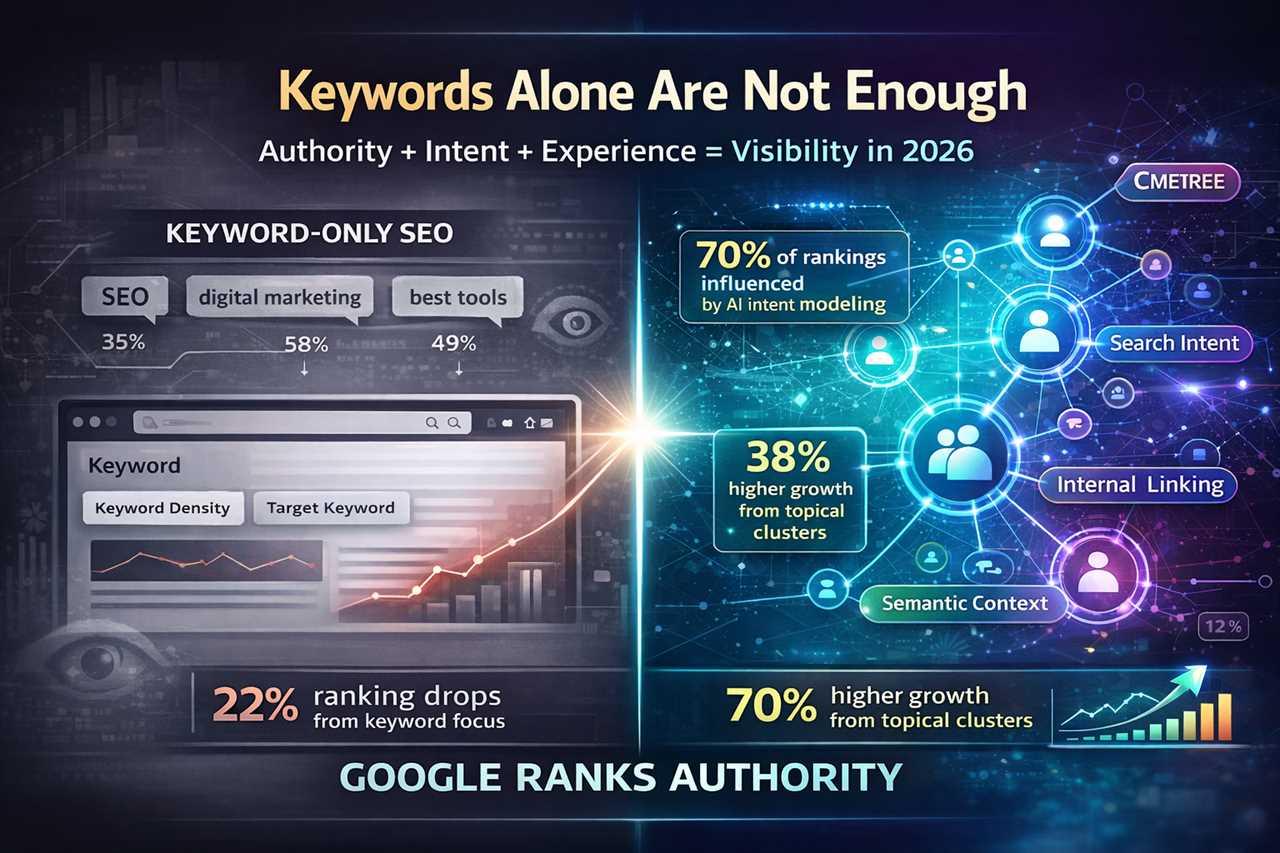
Research shows that websites focused solely on keyword density saw a 22% drop in average ranking stability between 2024 and 2026. Meanwhile, sites emphasizing topical authority improved ranking consistency by 31% over the same period. The difference is structural strategy.
Authority also protects against volatility. Algorithm updates tend to impact shallow or manipulative content more severely than deep, expert-driven ecosystems. When your site demonstrates comprehensive knowledge, it is less likely to experience dramatic ranking swings.
Building Authority That Ranks
To compete in 2026, businesses must think beyond pages and focus on systems. Start by identifying your core expertise areas. Develop pillar content that addresses foundational concepts in detail. Then build supporting articles that expand on subtopics, case studies, and advanced strategies. Connect them through logical internal linking.
Consistency is equally important. Publishing within a defined niche strengthens contextual reinforcement. Avoid chasing trending keywords outside your expertise. Instead, deepen your authority in areas where you can genuinely provide value.
If you want to understand the broader evolution of modern search, continue reading
👉 SEO in 2026 Is Not About Keywords Anymore
The Competitive Advantage of Authority
The good news is that authority favors focused businesses. Large corporations often publish broad content without depth. Smaller, niche-focused companies can build tighter expertise clusters and outperform larger competitors. Studies indicate that niche authority sites outrank broader domains in 35% of competitive keyword segments when topical depth is strong.
Authority also enhances brand perception. When users repeatedly encounter your content across related topics, trust increases. That trust translates into longer sessions, higher conversion rates, and stronger referral traffic.
The Future of Ranking
Google does not rank websites based on keywords alone anymore. It ranks authority ecosystems. Businesses that recognize this transition early will secure stable visibility and long-term growth. Those who cling to outdated tactics will continue chasing rankings that never fully stabilize.
SEO in 2026 demands structural thinking, semantic depth, and consistent expertise. Authority is no longer optional. It is the foundation of visibility. Adapt your strategy now, and you will not just rank—you will lead.
Recommended Resources for AI Content Creation & Business Media Tools
Content is the fastest way to attract customers — and now, AI makes it easier than ever. These tools help you create professional videos, voiceovers, podcasts, and marketing content that make your business stand out and build trust instantly. You don’t need to be tech-savvy or hire expensive creators. With the right tools, you can produce powerful content in minutes and position yourself as the expert in your market. The businesses winning today are the ones creating content consistently. Take a look at the tools below and start creating content that brings you customers.
AI Video & Avatar Tools
HeyGen - Creates AI avatar spokesperson videos without filming.
ElevenLabs - Creates realistic AI voiceovers and voice cloning.
BizClips - Done-for-you business video creation service.
Podcasting, Video & Repurposing Tools
StreamYard - Live streaming studio for broadcasting and recording shows.
Castmagic - Turns podcasts and videos into blogs, posts, and marketing content.
YouTube Growth & Optimization
VidIQ - Helps grow YouTube channels using SEO tools and analytics.
Community & Course Platforms
Skool - Platform for building paid communities and online courses.
Hardware Tools
Maono Microphones - Professional microphones for podcasting and content creation.
Maono GamerWave Mic - USB microphone for podcasting, streaming, and recording.
Mindset & Personal Development
MindTrainer Pro - Programs designed to improve mindset, productivity, and success.