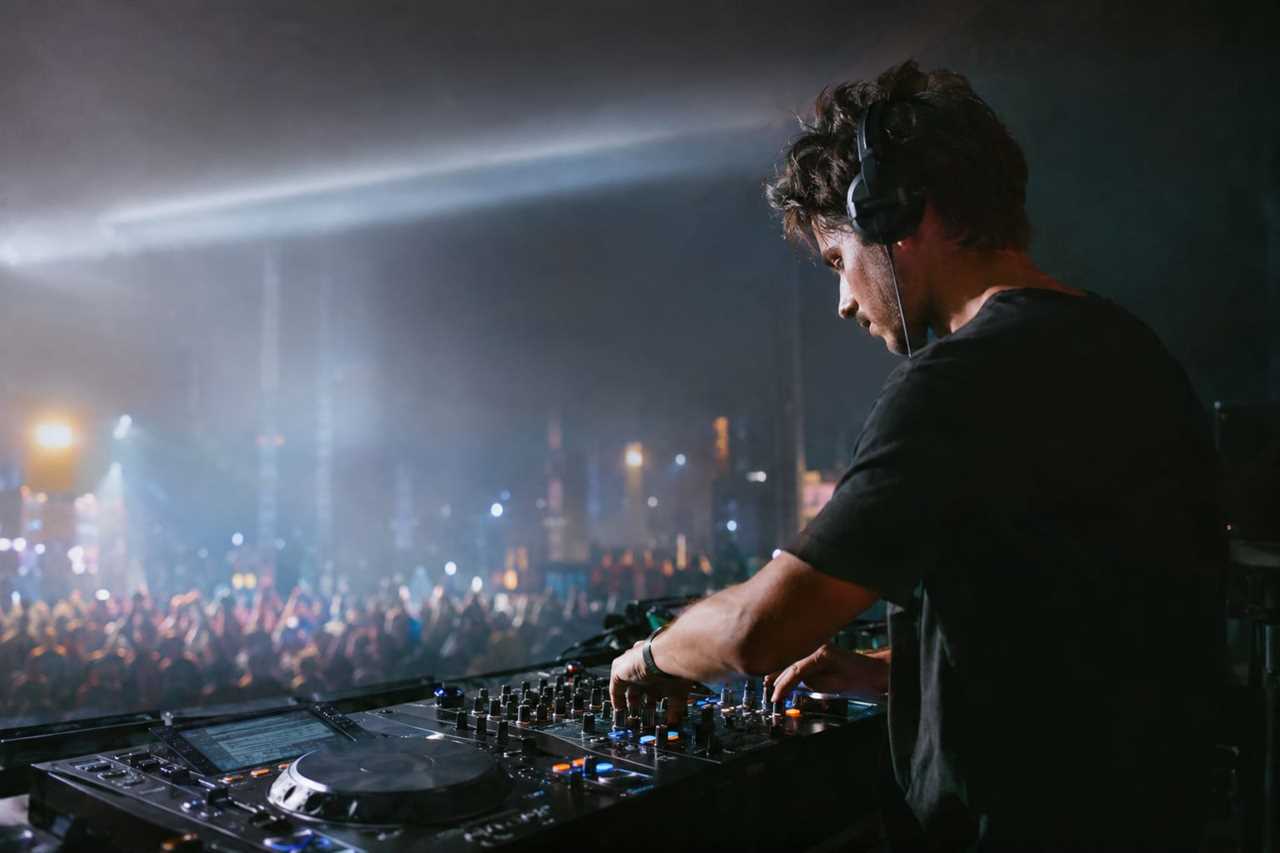
I've stood in a lot of crowds over the years. Sweaty clubs in Bangkok, outdoor stages in Portugal, a packed room in a converted bank building in Cornwall where the bass made the old vault doors rattle. Every one of those nights felt like something that couldn't be faked.
Now I'm not so sure.
A BBC piece caught my attention this week, and it asks a question I can't stop turning over: does it actually matter if a human made the art, or just that we believe one did?
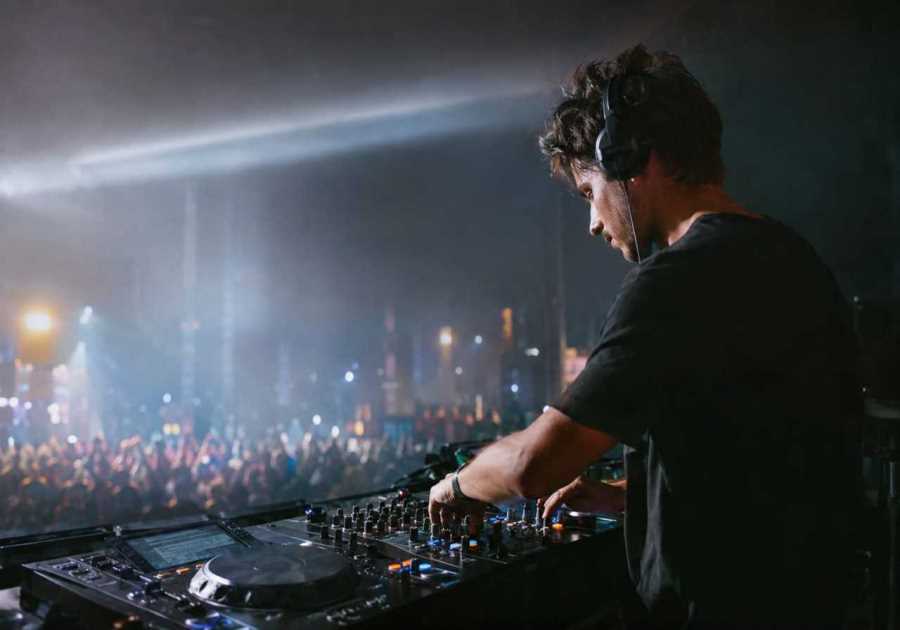
Here's the setup. A DJ named Tristan Rutherford was spinning records at a night called Rave Machine in Falmouth. Loud, sweaty, alive — the kind of night that feels entirely human. But he points out something a little uncomfortable. DJ software today can sync beats for you. Spotify and Apple Music both offer AI mixing tools. So if you're out there dancing and loving every minute, would you care if the person "DJing" was basically just pressing play?
That question stretches way beyond the dance floor.
The Numbers Don't Lie — But We Still Want to Believe
The music platform Deezer says 44% of tracks uploaded to it now are AI-generated. Even more surprising: 97% of listeners couldn't tell the difference between AI and human-made tracks when tested. But here's the twist — more than half of those same listeners said they do care whether a human made the music. They want the human in the room, even when they can't hear the difference.
That's a strange kind of loyalty, isn't it? We can't detect it, but we still want it.
Daniel Susskind, an economics professor at King's College London, has a theory. He says we don't walk into the Sistine Chapel and admire the ceiling just because it's beautiful. We admire it because a human being — flesh and blood, same as us — dreamed it up. That shared humanity is the thing we're actually buying.
He makes the same point about chess. When Garry Kasparov lost to the computer Deep Blue back in 1997, people figured interest in chess would fade. Instead, chess is bigger now than ever. Why? Because it was never just about the moves. It was about knowing a human being was making the decisions.
A "Human Premium" Is Emerging
Writer Kyle Chayka says AI writing has become so generic and predictable that readers are now gravitating toward writing that's messier, more personal, even imperfect. Same with design — illustrators are leaning into weirdness precisely because weirdness is harder for AI to fake.
Some academics are even trying to build a universal symbol for "human made," the same way Fairtrade labels showed up on coffee in the '80s. "AI-free" is already appearing on book covers and album sleeves.
I get why. I've traveled full-time since 2017, and almost everything I love about the places I've been came from an unplanned, human moment — a stranger's recommendation, a wrong turn that led somewhere better, a conversation with a local who steered me toward a trail or a dish or a song I never would've found otherwise. An algorithm has never once done that for me the way a person has.
But here's where it gets complicated.
We Already Let the Machines Choose for Us
Back in the '90s, I found new music through record shops and people I trusted. Today, a lot of that discovery happens through an algorithm quietly predicting what I'll like. It's convenient. It also means less of me is doing the choosing.
Chayka calls this "Filterworld" — a culture where art arrives pre-sorted, and we consume it with less effort, less friction, and honestly, less growth. The hard, weird, challenging stuff that used to shape us gets pushed aside for content that just turns our brains off for an hour.
So if we've already outsourced discovery to machines, why would we draw the line at creation?
Alex Mahon, who runs one of the world's biggest live entertainment companies, says she's seeing the opposite trend too — more people craving unpredictable, in-person experiences. The kind you can't download.
Maybe that's the real answer. Maybe the human premium survives not because we can prove a human made something, but because we still choose to show up, dance, discover, and decide for ourselves what's worth caring about.
That decision is still ours. For now.
Source: BBC
Still catching up? Start with Your Business Might Be Invisible to ChatGPT — Here's Why That Matters